Description
45 minutes: $175
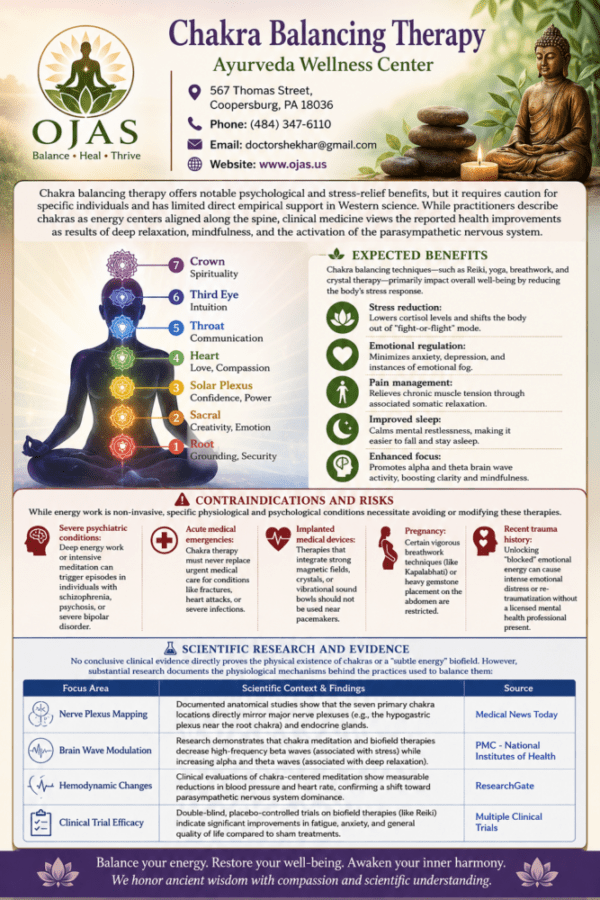
Chakra balancing therapy offers notable psychological and stress-relief benefits, but it requires caution for specific individuals and has limited direct empirical support in Western science. While practitioners describe chakras as energy centers aligned along the spine, clinical medicine views the reported health improvements as results of deep relaxation, mindfulness, and the activation of the parasympathetic nervous system.
Expected Benefits*
Chakra balancing techniques—such as Reiki, yoga, breathwork, and crystal therapy—primarily impact overall well-being by reducing the body’s stress response.
- Stress reduction: Lowers cortisol levels and shifts the body out of “fight-or-flight” mode.
- Emotional regulation: Minimizes anxiety, depression, and instances of emotional fog.
- Pain management: Relieves chronic muscle tension through associated somatic relaxation.
- Improved sleep: Calms mental restlessness, making it easier to fall and stay asleep.
- Enhanced focus: Promotes alpha and theta brain wave activity, boosting clarity and mindfulness.
Contraindications and Risks
While energy work is non-invasive, specific physiological and psychological conditions necessitate avoiding or modifying these therapies.
- Severe psychiatric conditions: Deep energy work or intensive meditation can trigger episodes in individuals with schizophrenia, psychosis, or severe bipolar disorder.
- Acute medical emergencies: Chakra therapy must never replace urgent medical care for conditions like fractures, heart attacks, or severe infections.
- Implanted medical devices: Therapies that integrate strong magnetic fields, crystals, or vibrational sound bowls should not be used near pacemakers.
- Pregnancy: Certain vigorous breathwork techniques (like Kapalabhati) or heavy gemstone placement on the abdomen are restricted.
- Recent trauma history: Unlocking “blocked” emotional energy can cause intense emotional distress or re-traumatization without a licensed mental health professional present.
Scientific Research and Evidence
No conclusive clinical evidence directly proves the physical existence of chakras or a “subtle energy” biofield. However, substantial research documents the physiological mechanisms behind the practices used to balance them:
| Focus Area | Scientific Context & Findings | Source |
| Nerve Plexus Mapping | Documented anatomical studies show that the seven primary chakra locations directly mirror major nerve plexuses (e.g., the hypogastric plexus near the root chakra) and endocrine glands. | Medical News Today |
| Brain Wave Modulation | Research demonstrates that chakra meditation and biofield therapies decrease high-frequency beta waves (associated with stress) while increasing alpha and theta waves (associated with deep relaxation). | PMC – National Institutes of Health |
| Hemodynamic Changes | Clinical evaluations of chakra-centered meditation show measurable reductions in blood pressure and heart rate, confirming a shift toward parasympathetic nervous system dominance. | ResearchGate |
| Clinical Trial Efficacy | Double-blind, placebo-controlled trials on biofield therapies (like Reiki) indicate significant improvements in fatigue, anxiety, and general quality of life compared to sham treatments. | PMC National Institute of Health |
*These statements are not evaluated by Food and Drug Administration. These services are not intended to diagnose, treat, cure or prevent any disease.