Description
Pinda Sweda / Kizhi Kerala Therapy
45 minutes: $175 each therapy
Generally Recommended: 7 therapies continuous days
This is a special type of Kerala Ayurveda Therapy – Swedana Chikitsa (fomentation) Kizhi therapy is very useful to alleviate pain in the joints, muscles etc. First we prep the imbalanced body part with gentle herbal oil massage and marma therapy. Then, a cotton poultice is prepared and filled with herbal powder. This powder is made specifically for your needs, so the herbs used will depend on the underlying condition for which this treatment is recommended. This poultice is then warmed and applied to the body part needing treatment.
This Ayurvedic therapy opens up the dermal pores and brings in medicinal heat to the muscles and joints, inducing pain relief and relaxation. This treatment can be added on to an Abhyanga massage. This service is only offered as a treatment under the guidance of our Vaidya and first requires an Ayurvedic consultation.
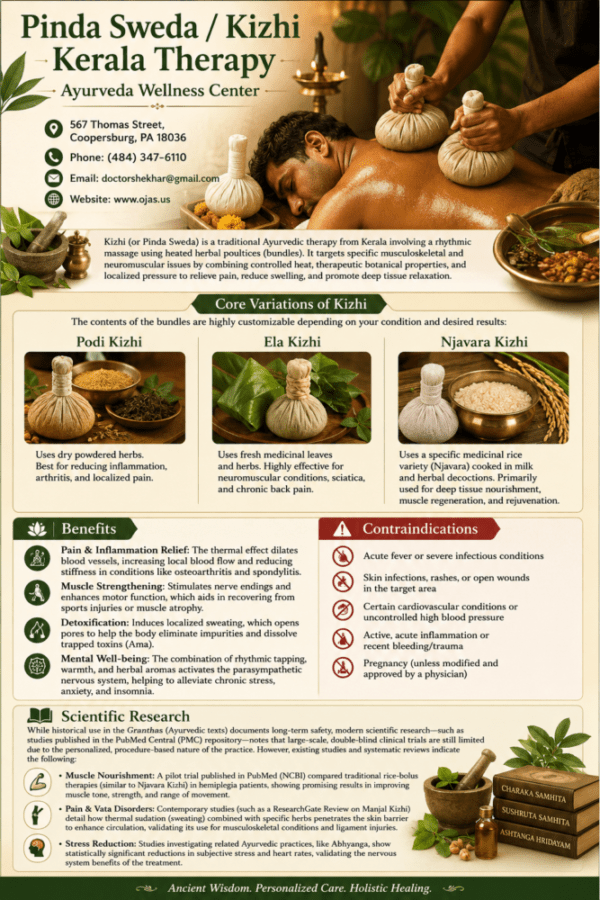
Kizhi (or Pinda Sweda) is a traditional Ayurvedic therapy from Kerala involving a rhythmic massage using heated herbal poultices (bundles). It targets specific musculoskeletal and neuromuscular issues by combining controlled heat, therapeutic botanical properties, and localized pressure to relieve pain, reduce swelling, and promote deep tissue relaxation.
Core Variations of Kizhi
The contents of the bundles are highly customizable depending on your condition and desired results:
- Podi Kizhi: Uses dry powdered herbs. Best for reducing inflammation, arthritis, and localized pain.
- Ela Kizhi: Uses fresh medicinal leaves and herbs. Highly effective for neuromuscular conditions, sciatica, and chronic back pain.
- Njavara Kizhi: Uses a specific medicinal rice variety (Njavara) cooked in milk and herbal decoctions. Primarily used for deep tissue nourishment, muscle regeneration, and rejuvenation.
Benefits
- Pain & Inflammation Relief: The thermal effect dilates blood vessels, increasing local blood flow and reducing stiffness in conditions like osteoarthritis and spondylitis.
- Muscle Strengthening: Stimulates nerve endings and enhances motor function, which aids in recovering from sports injuries or muscle atrophy.
- Detoxification: Induces localized sweating, which opens pores to help the body eliminate impurities and dissolve trapped toxins (Ama).
- Mental Well-being: The combination of rhythmic tapping, warmth, and herbal aromas activates the parasympathetic nervous system, helping to alleviate chronic stress, anxiety, and insomnia.
- Beneficial in neurological conditions*
- Certain conditions in Arthritis caused due to block of Vata by Kapha*.
- Beneficial for over weight and obesity*
- Some types of acute pains like sciatica, lumbago etc*.
Contraindications
While Kizhi is generally safe, it is not recommended if you are experiencing the following:
- Acute fever or severe infectious conditions
- Skin infections, rashes, or open wounds in the target area
- Certain cardiovascular conditions or uncontrolled high blood pressure
- Active, acute inflammation or recent bleeding/trauma
- Pregnancy (unless modified and approved by a physician)
Scientific Research
While historical use in the Granthas (Ayurvedic texts) documents long-term safety, modern scientific research—such as studies published in the PubMed Central (PMC) repository—notes that large-scale, double-blind clinical trials are still limited due to the personalized, procedure-based nature of the practice. However, existing studies and systematic reviews indicate the following:
- Muscle Nourishment: A pilot trial published in PubMed (NCBI) compared traditional rice-bolus therapies (similar to Njavara Kizhi) in hemiplegia patients, showing promising results in improving muscle tone, strength, and range of movement.
- Pain & Vata Disorders: Contemporary studies (such as a ResearchGate Review on Manjal Kizhi) detail how thermal sudation (sweating) combined with specific herbs penetrates the skin barrier to enhance circulation, validating its use for musculoskeletal conditions and ligament injuries.
- Stress Reduction: Studies investigating related Ayurvedic practices, like Abhyanga, show statistically significant reductions in subjective stress and heart rates, validating the nervous system benefits of the treatment
*These statements are not evaluated by Food and Drug Administration. These services are not intended to diagnose, treat, cure or prevent any disease.