Description
Vishesha – Deep Tissue Massage Therapy
45 minutes: $175
Vishesha* is a rhythmic deep tissue massage using herbalized oils blended according to a client’s unique constitution and imbalances.
Vishesha massage dissolves and cleanses ama from the tissues and stimulates the lymphatic system.
Removing blockages with this deep tissue massage increases blood flow, improves digestion, and awakens energy sources and deeper levels of consciousness.*
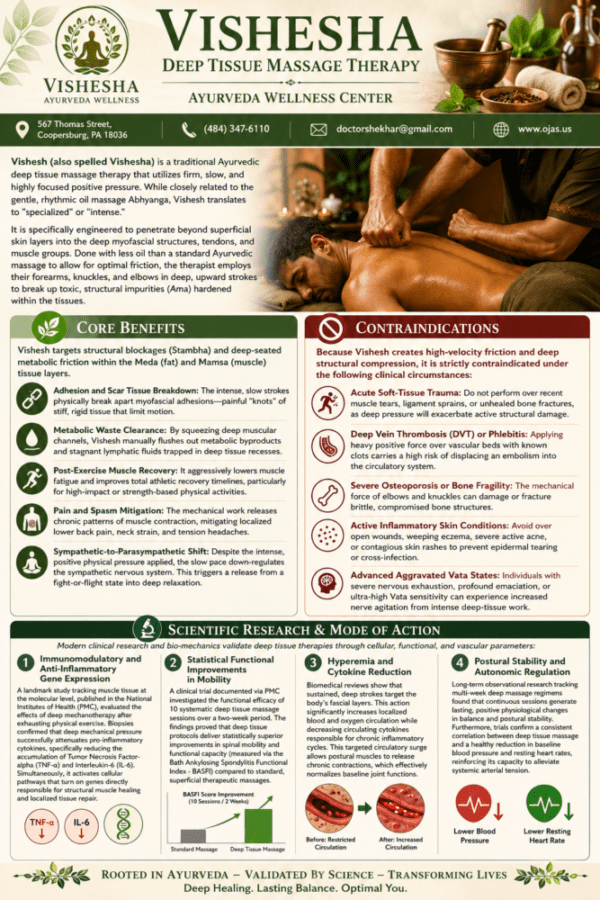
Vishesha (also spelled Vishesha) is a traditional Ayurvedic deep tissue massage therapy that utilizes firm, slow, and highly focused positive pressure. While closely related to the gentle, rhythmic oil massage Abhyanga, Vishesh translates to “specialized” or “intense.”
It is specifically engineered to penetrate beyond superficial skin layers into the deep myofascial structures, tendons, and muscle groups. Done with less oil than a standard Ayurvedic massage to allow for optimal friction, the therapist employs their forearms, knuckles, and elbows in deep, upward strokes to break up toxic, structural impurities (Ama) hardened within the tissues.
🌿 Core Benefits*
Vishesha targets structural blockages (Stambha) and deep-seated metabolic friction within the Meda (fat) and Mamsa (muscle) tissue layers.
- Adhesion and Scar Tissue Breakdown: The intense, slow strokes physically break apart myofascial adhesions—painful “knots” of stiff, rigid tissue that limit motion.
- Metabolic Waste Clearance: By squeezing deep muscular channels, Vishesh manually flushes out metabolic byproducts and stagnant lymphatic fluids trapped in deep tissue recesses.
- Post-Exercise Muscle Recovery: It aggressively lowers muscle fatigue and improves total athletic recovery timelines, particularly for high-impact or strength-based physical activities.
- Pain and Spasm Mitigation: The mechanical work releases chronic patterns of muscle contraction, mitigating localized lower back pain, neck strain, and tension headaches.
- Sympathetic-to-Parasympathetic Shift: Despite the intense, positive physical pressure applied, the slow pace down-regulates the sympathetic nervous system. This triggers a release from a fight-or-flight state into deep relaxation.
🚫 Contraindications
Because Vishesha creates high-velocity friction and deep structural compression, it is strictly contraindicated under the following clinical circumstances:
- Acute Soft-Tissue Trauma: Do not perform over recent muscle tears, ligament sprains, or unhealed bone fractures, as deep pressure will exacerbate active structural damage.
- Deep Vein Thrombosis (DVT) or Phlebitis: Applying heavy positive force over vascular beds with known clots carries a high risk of displacing an embolism into the circulatory system.
- Severe Osteoporosis or Bone Fragility: The mechanical force of elbows and knuckles can damage or fracture brittle, compromised bone structures.
- Active Inflammatory Skin Conditions: Avoid over open wounds, weeping eczema, severe active acne, or contagious skin rashes to prevent epidermal tearing or cross-infection.
- Advanced Aggravated Vata States: Individuals with severe nervous exhaustion, profound emaciation, or ultra-high Vata sensitivity can experience increased nerve agitation from intense deep-tissue work.
🔬 Scientific Research & Mode of Action
Modern clinical research and bio-mechanics validate deep tissue therapies through cellular, functional, and vascular parameters:
- Immunomodulatory and Anti-Inflammatory Gene Expression
A landmark study tracking muscle tissue at the molecular level, published in the National Institutes of Health (PMC), evaluated the effects of deep mechanotherapy after exhausting physical exercise. Biopsies confirmed that deep mechanical pressure successfully attenuates pro-inflammatory cytokines, specifically reducing the accumulation of Tumor Necrosis Factor-alpha (TNF-α) and Interleukin-6 (IL-6). Simultaneously, it activates cellular pathways that turn on genes directly responsible for structural muscle healing and localized tissue repair.
- Statistical Functional Improvements in Mobility
A clinical trial documented via PMC investigated the functional efficacy of 10 systematic deep tissue massage sessions over a two-week period. The findings proved that deep tissue protocols deliver statistically superior improvements in spinal mobility and functional capacity (measured via the Bath Ankylosing Spondylitis Functional Index – BASFI) compared to standard, superficial therapeutic massages.
- Hyperemia and Cytokine Reduction
Biomedical reviews show that sustained, deep strokes target the body’s fascial layers. This action significantly increases localized blood and oxygen circulation while decreasing circulating cytokines responsible for chronic inflammatory cycles. This targeted circulatory surge allows postural muscles to release chronic contractions, which effectively normalizes baseline joint functions.
- Postural Stability and Autonomic Regulation
Long-term observational research tracking multi-week deep massage regimens found that continuous sessions generate lasting, positive physiological changes in balance and postural stability. Furthermore, trials confirm a consistent correlation between deep tissue massage and a healthy reduction in baseline blood pressure and resting heart rates, reinforcing its capacity to alleviate systemic arterial tension.
*These statements are NOT evaluated by FDA and and the therapy is NOT diagnosis, treat, cure or prevent any mental and physical disease.