Description
Dhooma Paana (Herbal Smoke) Therapy
45 minutes: $175 each therapy
Generally Recommended: 7 therapies continuous days
Dhooma Paana* is a therapeutic herbal smoke therapy, using a special instrument the herbal powders are burnt and the smoke emitted is inhaled. The excessive accumulation of the Kapha dosha in the head as well as respiratory system is best cleared by this Dhooma Paana Therapy.
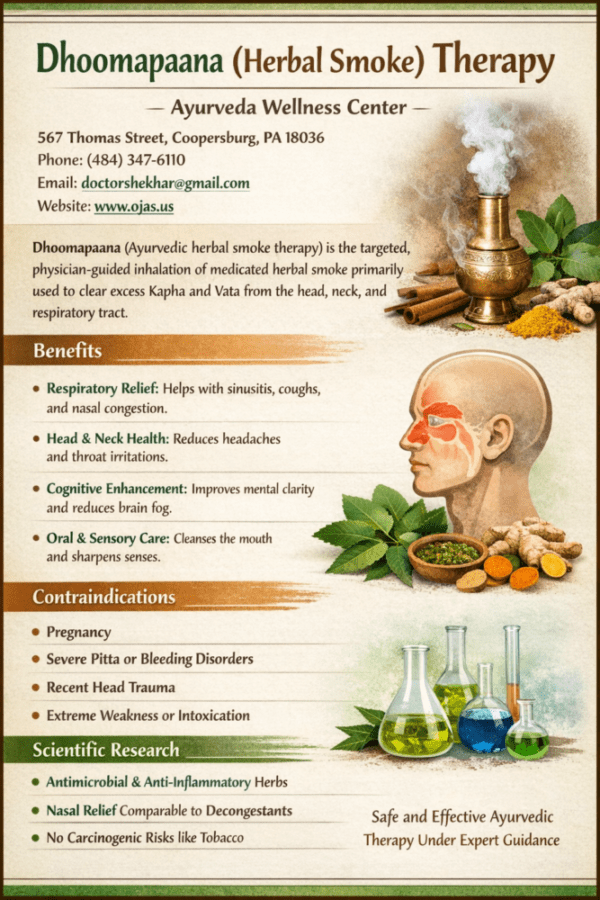
Dhoomapaana (Ayurvedic herbal smoke therapy) is the targeted, physician-guided inhalation of medicated herbal smoke primarily used to clear excess Kapha and Vata from the head, neck, and respiratory tract. It is a holistic practice distinct from recreational smoking, utilizing specific apparatuses to maximize phytochemical absorption.
Benefits
The therapy delivers volatile compounds rapidly through the respiratory mucosa for localized and systemic relief:
- Respiratory Relief: Thins mucus and provides symptomatic relief from allergic rhinitis, chronic sinusitis, coughs, and nasal congestion.
- Head and Neck Health: Helps reduce tension headaches, migraines, and throat irritations.
- Cognitive Enhancement: Certain herbs (like Vacha and Jatamansi) are used for anxiolytic and neuroprotective properties, helping to reduce brain fog and improve mental alertness.
- Oral and Sensory Care: Cleanses the oral cavity, reduces bad breath, and sharpens sensory perception (eyes, ears, and nose)
Benefits*:
- Beneficial in heaviness of the head
- Headache
- Chronic sinusitis
- Ear ache
- Pain in the eyes
- Cough
- Hiccough
- Breathlessness
- Irritation and stiffness of the throat
- Lack of stability of teeth
- Watering of the mouth
- Diseases of the ear
- Illness related to the nose
- Chronic infection of the upper respiratory tract
- Halitosis
- Tooth ache
- Stiffness of the mandible
- Lack of taste in the mouth
- Stiffness at the sides of the neck
- Pruritus
- Worm infestation
- Pallor of mouth
- Excessive salivation
- Baldness
- Premature graying of hair
- Hair fall
- Sneezing
- Confusion state
- Excessive drowsiness
- Excessive sleep
Contraindications*:
Dhoomapaana should be performed under professional Ayurvedic guidance. It is strictly contraindicated in cases of:
- The persons undergone same day virechana therapy
- The persons undergone same day basti therapy
- Suffering from bleeding disorders
- Suffering with grief
- Pregnant women
- Person who is exhausted due to physical work
- Alcohol consumed
- Excessive Aama Dosha
- Excessive Kapha dosha
- Persons who has not slept at night
- Clients suffering from transient loss of consciousness
- Person suffering from giddiness / dizziness
- Persons having excessive thirst
- Persons who has consumed milk immediately
- Persons who has taken plenty of fatty foods
- Progressive cataract
- Anemia
- Diphtheria
- Excessive eructation / burping
- Ascites
- Children
- Debilitated person
- Person who has consumed fish
- Person in a state of anger for any reason
- Person consumed yogurt
- Person who has consumed honey
- Person who has just taken his meals
- Person suffering from head injury
- Severe Pitta aggravation or high internal heat
- Bleeding disorders (e.g., epistaxis)
- Extreme physical weakness or intoxication
- Recent head trauma, severe eye disorders, or poisoning
- Flatulence
Scientific Research
While ancient Ayurvedic texts describe detailed formulations and safety protocols, modern scientific investigation is beginning to isolate the mechanisms of the therapy:
- In Vitro Efficacy: Studies indicate that herbs traditionally used in Dhooma (such as turmeric, neem, and guggulu) contain volatile phytochemicals that display strong antimicrobial, mucolytic, and anti-inflammatory properties.
- Clinical Trials: Preliminary clinical observations suggest that nasal-directed, medicated herbal smoke can relieve chronic rhinitis and nasal obstruction symptoms comparably to conventional decongestants—but without the rebound congestion side effect.
- Safety vs. Tobacco: Research into Ayurvedic Dhoomapaana notes that it lacks the pulmonary and carcinogenic risks associated with tobacco smoking, as exposure is strictly controlled, brief, and primarily nasally inhaled rather than broncho-pulmonary
*These statements are not evaluated by Food and Drug Administration. These services are not intended to diagnose, treat, cure or prevent any disease.