Description
Rejuvenation Massage Therapy
Price: $175
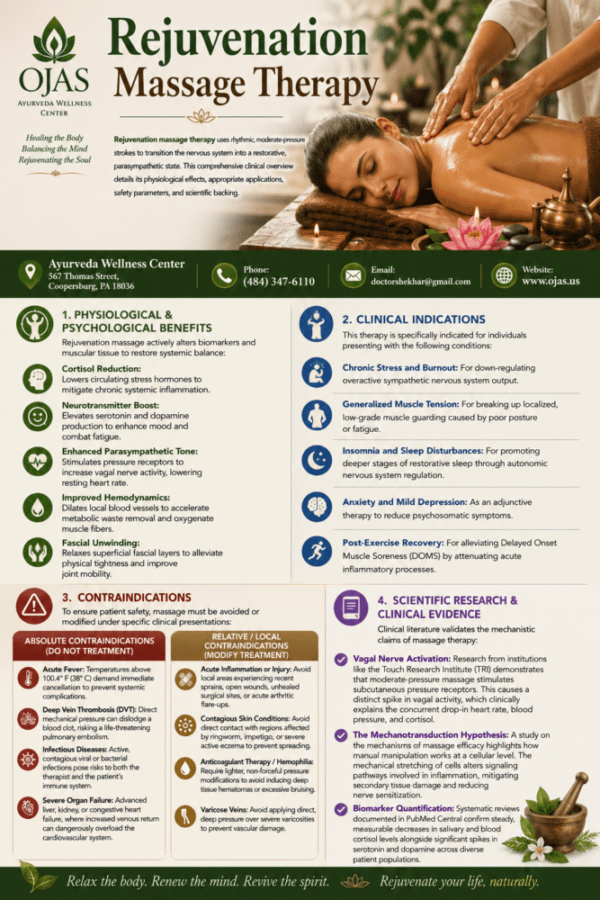
Rejuvenation massage therapy uses rhythmic, moderate-pressure strokes to transition the nervous system into a restorative, parasympathetic state. This comprehensive clinical overview details its physiological effects, appropriate applications, safety parameters, and scientific backing.
- Physiological & Psychological Benefits
Rejuvenation massage actively alters biomarkers and muscular tissue to restore systemic balance:
- Cortisol Reduction: Lowers circulating stress hormones to mitigate chronic systemic inflammation.
- Neurotransmitter Boost: Elevates serotonin and dopamine production to enhance mood and combat fatigue.
- Enhanced Parasympathetic Tone: Stimulates pressure receptors to increase vagal nerve activity, lowering resting heart rate.
- Improved Hemodynamics: Dilates local blood vessels to accelerate metabolic waste removal and oxygenate muscle fibers.
- Fascial Unwinding: Relaxes superficial fascial layers to alleviate physical tightness and improve joint mobility.
- Clinical Indications
This therapy is specifically indicated for individuals presenting with the following conditions:
- Chronic Stress and Burnout: For down-regulating overactive sympathetic nervous system output.
- Generalized Muscle Tension: For breaking up localized, low-grade muscle guarding caused by poor posture or fatigue.
- Insomnia and Sleep Disturbances: For promoting deeper stages of restorative sleep through autonomic nervous system regulation.
- Anxiety and Mild Depression: As an adjunctive therapy to reduce psychosomatic symptoms.
- Post-Exercise Recovery: For alleviating Delayed Onset Muscle Soreness (DOMS) by attenuating acute inflammatory processes.
- Contraindications
To ensure patient safety, massage must be avoided or modified under specific clinical presentations:
Absolute Contraindications (Do Not Treatment)
- Acute Fever: Temperatures above 100.4° F (38° C) demand immediate cancellation to prevent systemic complications.
- Deep Vein Thrombosis (DVT): Direct mechanical pressure can dislodge a blood clot, risking a life-threatening pulmonary embolism.
- Infectious Diseases: Active, contagious viral or bacterial infections pose risks to both the therapist and the patient’s immune system.
- Severe Organ Failure: Advanced liver, kidney, or congestive heart failure, where increased venous return can dangerously overload the cardiovascular system.
Relative / Local Contraindications (Modify Treatment)
- Acute Inflammation or Injury: Avoid local areas experiencing recent sprains, open wounds, unhealed surgical sites, or acute arthritic flare-ups.
- Contagious Skin Conditions: Avoid direct contact with regions affected by ringworm, impetigo, or severe active eczema to prevent spreading.
- Anticoagulant Therapy / Hemophilia: Require lighter, non-forceful pressure modifications to avoid inducing deep tissue hematomas or excessive bruising.
- Varicose Veins: Avoid applying direct, deep pressure over severe varicosities to prevent vascular damage.
- Scientific Research & Clinical Evidence
Clinical literature validates the mechanistic claims of massage therapy:
- Vagal Nerve Activation: Research from institutions like the Touch Research Institute (TRI) demonstrates that moderate-pressure massage stimulates subcutaneous pressure receptors. This causes a distinct spike in vagal activity, which clinically explains the concurrent drop-in heart rate, blood pressure, and cortisol.
- The Mechanotransduction Hypothesis: A study on the mechanisms of massage efficacy highlights how manual manipulation works at a cellular level. The mechanical stretching of cells alters signaling pathways involved in inflammation, mitigating secondary tissue damage and reducing nerve sensitization.
- Biomarker Quantification: Systematic reviews documented in PubMed Central confirm steady, measurable decreases in salivary and blood cortisol levels alongside significant spikes in serotonin and dopamine across diverse patient populations.