Description
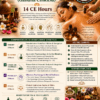
Ayurvedic Aromatherapy (Gandha Chikitsa) Training
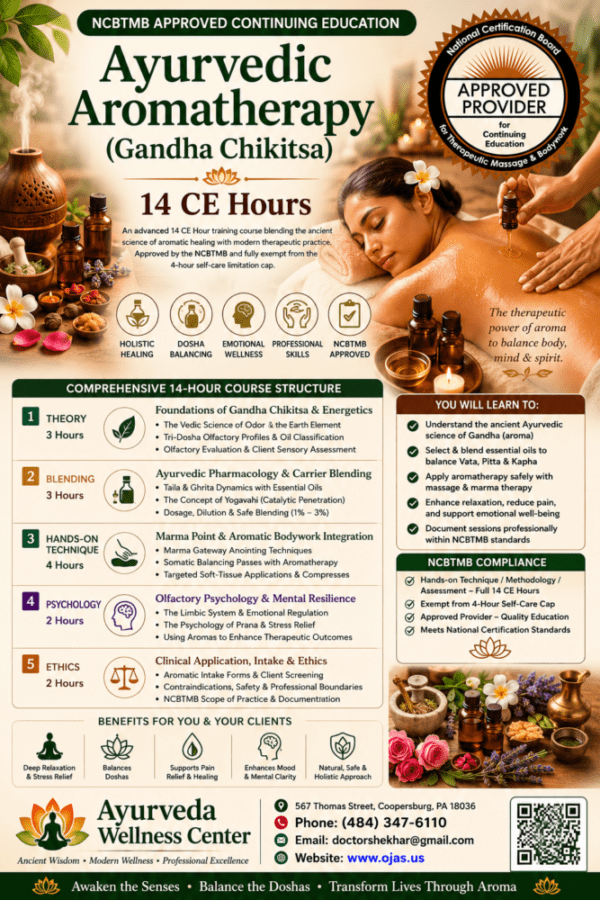
14 CE Hours
An 14 CE Hour “Ayurvedic Aromatherapy (Gandha Chikitsa) Training” course approved by the NCBTMB is structured to balance Eastern olfactory science with Western clinical bodywork application. Because this curriculum integrates topical botanical pharmacology with manual assessment, it is classified under Massage Therapy Technique/Methodology/Assessment and is fully exempt from the NCBTMB’s 4-hour self-care limitation cap.
Aromatherapy is a complementary therapy that uses concentrated plant extracts and essential oils. When inhaled, scent molecules stimulate the olfactory nerves and the amygdala, the brain’s emotional center. Alternatively, oils are diluted in carrier oils for topical massage.
The formal 14-hour course structure is divided into distinct theoretical, practical, and clinical integration blocks:
🗺️ Comprehensive 14-Hour Course Structure
Theory 3 hours
Blending 3 hours
Hand-on Technique 4 hours
Psychology 2 hours
Ethics 2 hours
Part 1: Foundations of Gandha Chikitsa & Energetics (3 Hours)
This opening theoretical block establishes how olfactory stimuli travel transdermally and neurologically to modify a client’s Prana (vital life force).
- The Vedic Science of Odor: Studying classical texts regarding Gandha (aroma/scent) and its relationship to the earth element and sensory receptors.
- The Tri-Dosha Olfactory Profile: Classifying essential oils by their innate elemental qualities (Mahabhutas) and thermal impacts (Virya):
- Vata Balancing: Warming, grounding, sweet, and heavy oils (e.g., vetiver, jatamansi, ginger).
- Pitta Balancing: Cooling, calming, sweet, and bitter oils (e.g., sandalwood, rose, jasmine).
- Kapha Balancing: Warming, light, ticking, and drying oils (e.g., camphor, eucalyptus, clove).
- Olfactory Evaluation Mechanics: Establishing safe testing workflows to gauge a client’s specific sensory compatibility and olfactory tolerance prior to topical blending.
Part 2: Ayurvedic Pharmacology & Carrier Blending (3 Hours)
This technical module trains the therapist on the safe, legal, and therapeutic mixing of volatile oils with heavy Ayurvedic base carriers.
- Taila & Ghrita Dynamics: Mastering the interaction between potent essential oils and heavy botanical base carriers (Tailas) such as unrefined sesame, mustard, or cooling coconut oil.
- The Concept of Yogavahi: Understanding how specific aromatic molecules act as catalysts (Yogavahi), driving therapeutic herbal compounds deeper into deep soft-tissue layers (Dhatus).
- Dosage & Precision Dilution: Designing safe clinical dilution percentages (1% to 3%) tailored specifically to acute physical pain versus chronic neurological or emotional stress profiles.
Part 3: Marma Point & Aromatic Bodywork Integration (4 Hours)
The primary hands-on practical application block, teaching therapists how to combine massage strokes with targeted aromatic application.
- Marma Gateway Anointing: Learning the precise application of customized aromatic blends onto key neural-lymphatic junctions (Marma points) to relieve structural stagnation.
- Somatic Balancing Passes: Synchronizing aromatherapy inhalation therapy with long, rhythmic strokes (Anuvasana) to trigger the parasympathetic nervous system.
- Targeted Soft-Tissue Applications: Integrating hot/cold localized compresses (Swedana packs) infused with custom Ayurvedic aromatic blends to alleviate localized joint pain, arthritis, and muscular guarding.
Part 4: Olfactory Psychology & Mental Resilience (2 Hours)
This module addresses the psychological impact of scent on the central nervous system during bodywork.
- The Limbic System Loop: Mapping how targeted Ayurvedic aromas instantly access the brain’s limbic system to shift emotional states, reduce cortisol production, and ease client anxiety.
- The Psychology of Prana: Utilizing aromatic oils to address chronic stress and mental fatigue (Manas) during high-touch therapeutic bodywork.
Part 5: Clinical Application, Intake & Ethics (2 Hours)
The final block covers documentation, client safety boundaries, and operating legally under massage boards.
- Aromatic Intake Documentation: Designing comprehensive client screening forms that actively catalog scent preferences, respiratory conditions, sensitivities, and allergies.
- Contraindication Protocols: Enforcing strict usage barriers regarding pregnancy, open wounds, acute asthma, and severe skin inflammation.
- NCBTMB Scope Defense: Formatting clinical documentation to ensure the session focus remains strictly on soft-tissue stress mitigation, avoiding any illegal medical claims regarding internal disease treatment or curing illnesses.
💳 NCBTMB Provider Information
- Approved Provider Number: 451878-12
- CE Hours Awarded: 14 CEs
- Approval Body: National Certification Board for Therapeutic Massage & Bodywork (NCBTMB)
- Target Audience: Licensed Massage Therapists (LMTs), Certified Bodyworkers, and Estheticians.
- Certificate: Issued immediately upon successful completion of the course and practical evaluation.