Description
Autism
Ayurveda Wellness Center, 567 Thomas Street, Coopersburg, PA 18036
Email: doctorshekhar@gmail.com
Phone: (484) 347-6110
Web: www.ojas.us
Thank you for your interest in an Ayurvedic Wellness Consultation!
We are delighted that you have chosen to take this important step toward improving your health and well-being through the wisdom of Ayurveda. We look forward to supporting you on your wellness journey.
To schedule your consultation, please complete the online consultation request form and submit it along with your payment using the link below:
Ayurvedic Wellness Consultation Request Form:
https://www.cognitoforms.com/Ayurveda4/AyurvedicWellnessConsultationRequest
Once we receive your completed form and payment, a member of our team will contact you to confirm your appointment and provide any additional information you may need.
If you have any questions before your consultation, please don’t hesitate to reach out. We are here to help and are honored to be part of your path to better health.
We look forward to meeting you and helping you achieve greater balance, vitality, and wellness.
With warm regards,
Ayurveda Wellness Center
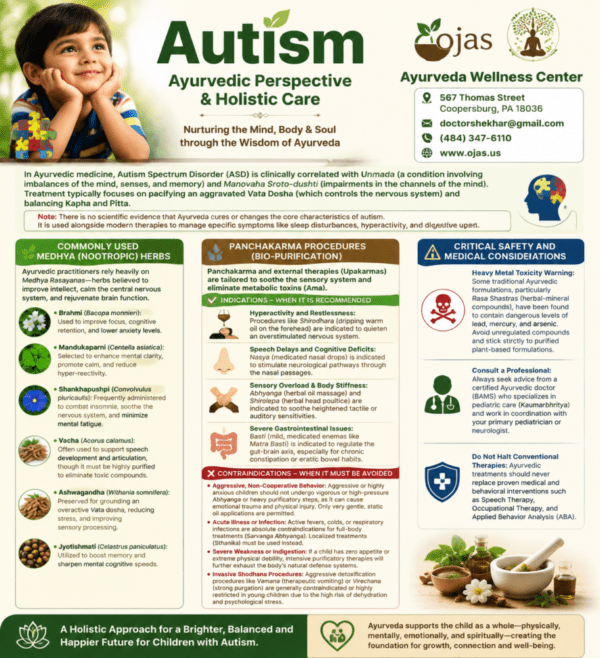
In Ayurvedic medicine, Autism Spectrum Disorder (ASD) is clinically correlated with Unmada (a condition involving imbalances of the mind, senses, and memory) and Manovaha Sroto-dushti (impairments in the channels of the mind). Treatment typically focuses on pacifying an aggravated Vata Dosha (which controls the nervous system) and balancing Kapha and Pitta.
Note: There is no scientific evidence that Ayurveda cures or changes the core characteristics of autism. It is used alongside modern therapies to manage specific symptoms like sleep disturbances, hyperactivity, and digestive upset.
🌿 Commonly Used Medhya (Nootropic) Herbs
Ayurvedic practitioners rely heavily on Medhya Rasayanas—herbs believed to improve intellect, calm the central nervous system, and rejuvenate brain function.
- Brahmi (Bacopa monnieri): Used to improve focus, cognitive retention, and lower anxiety levels.
- Mandukaparni (Centella asiatica): Selected to enhance mental clarity, promote calm, and reduce hyper-reactivity.
- Shankhapushpi (Convolvulus pluricaulis): Frequently administered to combat insomnia, soothe the nervous system, and minimize mental fatigue.
- Vacha (Acorus calamus): Often used to support speech development and articulation, though it must be highly purified to eliminate toxic compounds.
- Ashwagandha (Withania somnifera): Preserved for grounding an overactive Vata dosha, reducing stress, and improving sensory processing.
- Jyotishmati (Celastrus paniculatus): Utilized to boost memory and sharpen mental cognitive speeds.
💆 Panchakarma Procedures (Bio-Purification)
Panchakarma and external therapies (Upakarmas) are tailored to soothe the sensory system and eliminate metabolic toxins (Ama).
Indications (When it is Recommended)
- Hyperactivity and Restlessness: Procedures like Shirodhara (dripping warm oil on the forehead) are indicated to quieten an overstimulated nervous system.
- Speech Delays and Cognitive Deficits: Nasya (medicated nasal drops) is indicated to stimulate neurological pathways through the nasal passages.
- Sensory Overload & Body Stiffness: Abhyanga (herbal oil massage) and Shirolepa (herbal head poultice) are indicated to soothe heightened tactile or auditory sensitivities.
- Severe Gastrointestinal Issues: Basti (mild, medicated enemas like Matra Basti) is indicated to regulate the gut-brain axis, especially for chronic constipation or erratic bowel habits.
Contraindications (When it Must Be Avoided)
- Aggressive, Non-Cooperative Behavior: Aggressive or highly anxious children should not undergo vigorous or high-pressure Abhyanga or heavy purificatory steps, as it can cause emotional trauma and physical injury. Only very gentle, static oil applications are permitted.
- Acute Illness or Infection: Active fevers, colds, or respiratory infections are absolute contraindications for full-body treatments (Sarvanga Abhyanga). Localized treatments (Sthanika) must be used instead.
- Severe Weakness or Indigestion: If a child has zero appetite or extreme physical debility, intensive purificatory therapies will further exhaust the body’s natural defense systems.
- Invasive Shodhana Procedures: Aggressive detoxification procedures like Vamana (therapeutic vomiting) or Virechana (strong purgation) are generally contraindicated or highly restricted in young children due to the high risk of dehydration and psychological stress.
⚠️ Critical Safety and Medical Considerations
- Heavy Metal Toxicity Warning: Some traditional Ayurvedic formulations, particularly Rasa Shastras (herbal-mineral compounds), have been found to contain dangerous levels of lead, mercury, and arsenic. Avoid unregulated compounds and stick strictly to purified plant-based formulations.
- Consult a Professional: Always seek advice from a certified Ayurvedic doctor (BAMS) who specializes in pediatric care (Kaumarbhritya) and work in coordination with your primary pediatrician or neurologist.
- Do Not Halt Conventional Therapies: Ayurvedic treatments should never replace proven medical and behavioral interventions such as Speech Therapy, Occupational Therapy, and Applied Behavior Analysis (ABA)