Description
Midlife Crisis in Women & Men
5 days / $2500
Thank you for your interest in our Ayurveda Wellness Programs.
Each individual’s health condition will be thoroughly assessed during the initial Ayurvedic Wellness Consultation. Based on the consultation, a personalized wellness regimen and lifestyle protocol will be developed for you to follow at home. Depending on your specific health needs and progress, we may recommend a 5-day Wellness Program or an extended Panchakarma program of 7, 10, 14, 21, or 28 days.
To begin the process, please complete the Personalized Ayurvedic Wellness Consultation Request Form:
https://www.cognitoforms.com/Ayurveda4/AyurvedicWellnessConsultationRequest
Thank you very much. I look forward to working with you.
Warm regards,
Shekhar Annambhotla
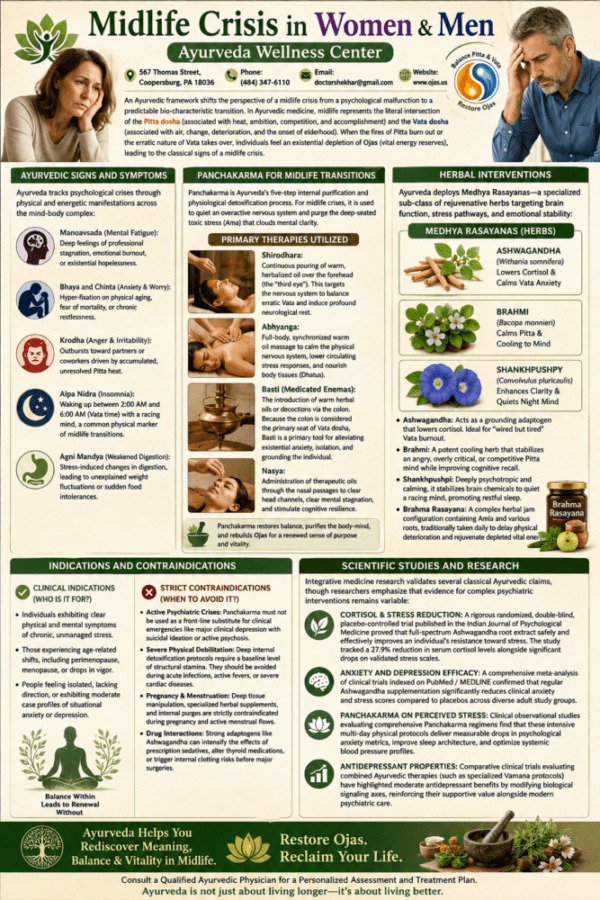
An Ayurvedic framework shifts the perspective of a midlife crisis from a psychological malfunction to a predictable bio-characteristic transition. In Ayurvedic medicine, midlife represents the literal intersection of the Pitta dosha (associated with heat, ambition, competition, and accomplishment) and the Vata dosha (associated with air, change, deterioration, and the onset of elderhood).
When the fires of Pitta burn out or the erratic nature of Vata takes over, individuals feel an existential depletion of Ojas (vital energy reserves), leading to the classical signs of a midlife crisis.
Ayurvedic Signs and Symptoms
Ayurveda tracks psychological crises through physical and energetic manifestations across the mind-body complex:
- Manoavsada (Mental Fatigue): Deep feelings of professional stagnation, emotional burnout, or existential hopelessness.
- Bhaya and Chinta (Anxiety & Worry): Hyper-fixation on physical aging, fear of mortality, or chronic restlessness.
- Krodha (Anger & Irritability): Outbursts toward partners or coworkers driven by accumulated, unresolved Pitta heat.
- Alpa Nidra (Insomnia): Waking up between 2:00 AM and 6:00 AM (Vata time) with a racing mind, a common physical marker of midlife transitions.
- Agni Mandya (Weakened Digestion): Stress-induced changes in digestion, leading to unexplained weight fluctuations or sudden food intolerances.
Panchakarma for Midlife Transitions
Panchakarma is Ayurveda’s five-step internal purification and physiological detoxification process. For midlife crises, it is used to quiet an overactive nervous system and purge the deep-seated toxic stress (Ama) that clouds mental clarity. [
Primary Therapies Utilized
- Shirodhara: Continuous pouring of warm, herbalized oil over the forehead (the “third eye”). This targets the nervous system to balance erratic Vata and induce profound neurological rest.
- Abhyanga: Full-body, synchronized warm oil massage to calm the physical nervous system, lower circulating stress responses, and nourish body tissues (Dhatus).
- Basti (Medicated Enemas): The introduction of warm herbal oils or decoctions via the colon. Because the colon is considered the primary seat of Vata dosha, Basti is a primary tool for alleviating existential anxiety, isolation, and grounding the individual.
- Nasya: Administration of therapeutic oils through the nasal passages to clear head channels, clear mental stagnation, and stimulate cognitive resilience.
Herbal Interventions
Ayurveda deploys Medhya Rasayanas—a specialized sub-class of rejuvenative herbs targeting brain function, stress pathways, and emotional stability:
MEDHYA RASAYANAS (HERBS)
ASHWAGANDHA – Lowers Cortisol @ Calms Vata Anxiety
BRAHMI – Calms Pitta & Cooling to Mind
SHANKHPUSHPY – Enhances Clarity & Quiets Night Mind
- Ashwagandha (Withania somnifera): Acts as a grounding adaptogen that lowers cortisol. It is ideal for individuals experiencing the classic “wired but tired” Vata flavor of burnout.
- Brahmi (Bacopa monnieri): A potent cooling herb that stabilizes an angry, overly critical, or competitive Pitta mind while improving cognitive recall and reducing stress.
- Shankhpushpi (Convolvulus pluricaulis): Deeply psychotropic and calming, it stabilizes brain chemicals to quiet a racing mind, promoting restful sleep.
- Brahma Rasayana: A complex herbal jam configuration containing Amla and various roots, traditionally taken daily to delay physical deterioration and rejuvenate depleted vital energy.
Indications and Contraindications
Clinical Indications (Who is it for?)
- Individuals exhibiting clear physical and mental symptoms of chronic, unmanaged stress.
- Those experiencing age-related shifts, including perimenopause, menopause, or drops in vigor.
- People feeling isolated, lacking direction, or exhibiting moderate case profiles of situational anxiety or depression.
Strict Contraindications (When to avoid it?)
- Active Psychiatric Crises: Panchakarma must not be used as a front-line substitute for clinical emergencies like major clinical depression with suicidal ideation or active psychosis.
- Severe Physical Debilitation: Deep internal detoxification protocols require a baseline level of structural stamina. They should be avoided during acute infections, active fevers, or severe cardiac diseases.
- Pregnancy & Menstruation: Deep tissue manipulation, specialized herbal supplements, and internal purges are strictly contraindicated during pregnancy and active menstrual flows.
- Drug Interactions: Strong adaptogens like Ashwagandha can intensify the effects of prescription sedatives, alter thyroid medications, or trigger internal clotting risks before major surgeries.
Scientific Studies and Research
Integrative medicine research validates several classical Ayurvedic claims, though researchers emphasize that evidence for complex psychiatric interventions remains variable:
- Cortisol & Stress Reduction: A rigorous randomized, double-blind, placebo-controlled trial published in the Indian Journal of Psychological Medicine proved that full-spectrum Ashwagandha root extract safely and effectively improves an individual’s resistance toward stress. The study tracked a 27.9% reduction in serum cortisol levels alongside significant drops on validated stress scales.
- Anxiety and Depression Efficacy: A comprehensive meta-analysis of clinical trials indexed on PubMed / MEDLINE confirmed that regular Ashwagandha supplementation significantly reduces clinical anxiety and stress scores compared to placebos across diverse adult study groups.
- Panchakarma on Perceived Stress: Clinical observational studies evaluating comprehensive Panchakarma regimens find that these intensive multi-day physical protocols deliver measurable drops in psychological anxiety metrics, improve sleep architecture, and optimize systemic blood pressure profiles.
- Antidepressant Properties: Comparative clinical trials evaluating combined Ayurvedic therapies (such as specialized Vamana protocols) have highlighted moderate antidepressant benefits by modifying biological signaling axes, reinforcing their supportive value alongside modern psychiatric care.
*This program is not evaluated by FDA and this program in not intended to diagnosis, treatment, cure or prevent any disease.