Description
Ayurvedic Pulse Technique for Massage Therapists Training
16 CE Hours
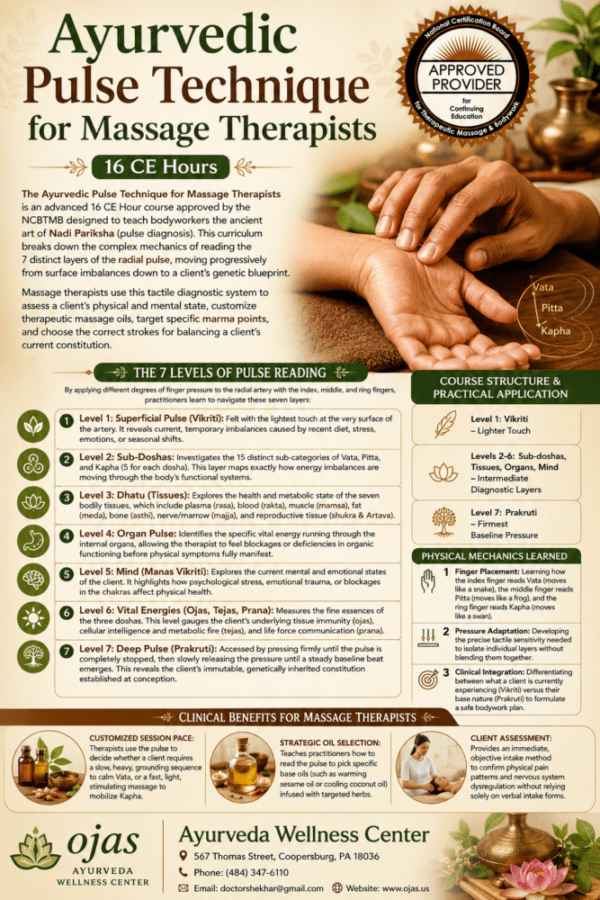
The Ayurvedic Pulse Technique for Massage Therapists is an advanced 16 CE Hour course approved by the NCBTMB designed to teach bodyworkers the ancient art of Nadi Pariksha (pulse diagnosis). This curriculum breaks down the complex mechanics of reading the 7 distinct layers of the radial pulse, moving progressively from surface imbalances down to a client’s genetic blueprint.
Massage therapists use this tactile diagnostic system to assess a client’s physical and mental state, customize therapeutic massage oils, target specific marma points, and choose the correct strokes for balancing a client’s current constitution.
Ayurvedic Pulse Technique and Its Interpretation in Clinical Practice
Dr. Shekhar Annambhotla will discuss the Ayurvedic Pulse Technique (Nadi Pariksha) and its clinical interpretation, providing participants with practical tools to assess and interpret the seven levels of pulse reading. This systematic approach enables practitioners to evaluate the client’s current health status, identify subtle imbalances, and understand the individual’s constitutional nature for developing personalized Ayurvedic treatment plans.
Level 1: Superficial Pulse (Vikriti)
The superficial pulse is detected with the lightest touch at the surface of the radial artery. It reflects the client’s current state of imbalance (Vikriti), revealing temporary changes caused by recent dietary habits, lifestyle, stress, emotional fluctuations, environmental influences, or seasonal variations. This level provides valuable insight into the body’s present condition.
Level 2: Sub-Doshas
This level examines the 15 sub-doshas—the five subdivisions each of Vata, Pitta, and Kapha. Assessment at this depth reveals how specific functional energies are operating throughout the body and identifies disturbances within various physiological systems, helping practitioners determine the origin and progression of doshic imbalances.
Level 3: Dhatus (Body Tissues)
The third level evaluates the health, nourishment, and metabolic status of the seven dhatus (body tissues):
- Rasa (plasma and lymph)
- Rakta (blood)
- Mamsa (muscle)
- Meda (adipose tissue)
- Asthi (bone)
- Majja (bone marrow and nervous tissue)
- Shukra/Artava (reproductive tissues)
This assessment provides insight into tissue vitality, nutritional status, and the progression of disease through the body’s structural systems.
Level 4: Organ Pulse
At this level, practitioners evaluate the energetic function of the body’s internal organs. The organ pulse helps identify energetic excesses, deficiencies, stagnation, or dysfunction within specific organs, often allowing subtle imbalances to be recognized before they develop into clinically apparent disease.
Level 5: Mind (Manas Vikriti)
The fifth level explores the client’s mental and emotional state (Manas Vikriti). It reveals the influence of psychological stress, emotional trauma, anxiety, depression, and energetic disturbances affecting the mind-body connection. This assessment also provides insight into the balance of the chakras and the impact of emotional patterns on physical health.
Level 6: Vital Energies (Ojas, Tejas, and Prana)
This level assesses the three subtle vital essences that sustain health:
- Ojas – the essence of immunity, vitality, strength, and resilience.
- Tejas – the subtle expression of metabolic fire, intelligence, and cellular transformation.
- Prana – the life-force energy responsible for communication, respiration, consciousness, and physiological coordination.
Evaluating these subtle energies allows practitioners to determine the client’s overall vitality, adaptive capacity, and level of physical and mental resilience.
Level 7: Deep Pulse (Prakruti)
The deepest pulse is assessed by gradually applying firm pressure until the pulse disappears and then slowly releasing the pressure until a steady, stable pulse returns. This level reveals the individual’s Prakruti (constitutional nature)—the innate doshic blueprint established at conception and determined by genetic inheritance. Understanding Prakruti enables practitioners to distinguish constitutional characteristics from acquired imbalances and to develop highly individualized recommendations for diet, lifestyle, herbal therapies, and Panchakarma.
Through understanding and integrating these seven levels of pulse reading, practitioners gain a comprehensive method for evaluating physical, physiological, psychological, energetic, and constitutional aspects of health. This multidimensional assessment supports accurate Ayurvedic diagnosis and facilitates personalized treatment strategies that promote balance, prevention, and optimal well-being.
Course Structure & Practical Application
Level 1: Vikriti – Lighter Touch
Levels 2-6: Sub-doshas, Tissues, Organs, Mind – Intermediate Diagnostic Layers
Level 7: Prakruti – Firmest Baseline Pressure
Physical Mechanics Learned
- Finger Placement: Learning how the index finger reads Vata (moves like a snake), the middle finger reads Pitta (moves like a frog), and the ring finger reads Kapha (moves like a swan).
- Pressure Adaptation: Developing the precise tactile sensitivity needed to isolate individual layers without blending them together.
- Clinical Integration: Differentiating between what a client is currently experiencing (Vikriti) versus their base nature (Prakruti) to formulate a safe bodywork plan.
Clinical Benefits for Massage Therapists
- Customized Session Pace: Therapists use the pulse to decide whether a client requires a slow, heavy, grounding sequence to calm Vata, or a fast, light, stimulating massage to mobilize Kapha.
- Strategic Oil Selection: Teaches practitioners how to read the pulse to pick specific base oils (such as warming sesame oil or cooling coconut oil) infused with targeted herbs.
- Client Assessment: Provides an immediate, objective intake method to confirm physical pain patterns and nervous system dysregulation without relying solely on verbal intake forms.
💳 NCBTMB Provider Information
- Approved Provider Number: 451878-12
- CE Hours Awarded: 16 CEs
- Approval Body: National Certification Board for Therapeutic Massage & Bodywork (NCBTMB)
- Target Audience: Licensed Massage Therapists (LMTs), Certified Bodyworkers, and Estheticians.
- Certificate: Issued immediately upon successful completion of the course and practical evaluation.