Description
5 days / $2500
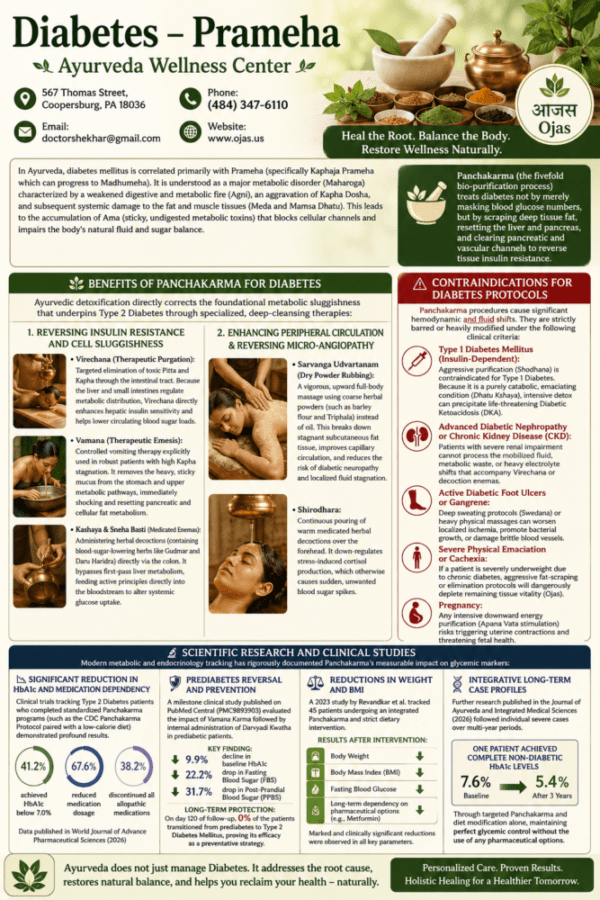
In Ayurveda, diabetes mellitus is correlated primarily with Prameha (specifically Kaphaja Prameha which can progress to Madhumeha). It is understood as a major metabolic disorder (Maharoga) characterized by a weakened digestive and metabolic fire (Agni), an aggravation of Kapha Dosha, and subsequent systemic damage to the fat and muscle tissues (Meda and Mamsa Dhatu). This leads to the accumulation of Ama (sticky, undigested metabolic toxins) that blocks cellular channels and impairs the body’s natural fluid and sugar balance.
Panchakarma (the fivefold bio-purification process) treats diabetes not by merely masking blood glucose numbers, but by scraping deep tissue fat, resetting the liver and pancreas, and clearing pancreatic and vascular channels to reverse tissue insulin resistance.
🌟 Benefits of Panchakarma for Diabetes
Ayurvedic detoxification directly corrects the foundational metabolic sluggishness that underpins Type 2 Diabetes through specialized, deep-cleansing therapies:
- Reversing Insulin Resistance and Cell Sluggishness
- Virechana (Therapeutic Purgation): Targeted elimination of toxic Pitta and Kapha through the intestinal tract. Because the liver and small intestines regulate metabolic distribution, Virechana directly enhances hepatic insulin sensitivity and helps lower circulating blood sugar loads.
- Vamana (Therapeutic Emesis): Controlled vomiting therapy explicitly used in robust patients with high Kapha stagnation. It removes the heavy, sticky mucus from the stomach and upper metabolic pathways, immediately shocking and resetting pancreatic and cellular fat metabolism.
- Kashaya & Sneha Basti (Medicated Enemas): Administering herbal decoctions (containing blood-sugar-lowering herbs like Gudmar and Daru Haridra) directly via the colon. It bypasses first-pass liver metabolism, feeding active principles directly into the bloodstream to alter systemic glucose uptake.
- Enhancing Peripheral Circulation & Reversing Micro-Angiopathy
- Sarvanga Udvartanam (Dry Powder Rubbing): A vigorous, upward full-body massage using coarse herbal powders (such as barley flour and Triphala) instead of oil. This breaks down stagnant subcutaneous fat tissue, improves capillary circulation, and reduces the risk of diabetic neuropathy and localized fluid stagnation.
- Shirodhara: Continuous pouring of warm medicated herbal decoctions over the forehead. It down-regulates stress-induced cortisol production, which otherwise causes sudden, unwanted blood sugar spikes.
⚠️ Contraindications for Diabetes Protocols
Panchakarma procedures cause significant hemodynamic and fluid shifts. They are strictly barred or heavily modified under the following clinical criteria:
- Type 1 Diabetes Mellitus (Insulin-Dependent): Aggressive purification (Shodhana) is contraindicated for Type 1 Diabetes. Because it is a purely catabolic, emaciating condition (Dhatu Kshaya), intensive detox can precipitate life-threatening Diabetic Ketoacidosis (DKA).
- Advanced Diabetic Nephropathy or Chronic Kidney Disease (CKD): Patients with severe renal impairment cannot process the mobilized fluid, metabolic waste, or heavy electrolyte shifts that accompany Virechana or decoction enemas.
- Active Diabetic Foot Ulcers or Gangrene: Deep sweating protocols (Swedana) or heavy physical massages can worsen localized ischemia, promote bacterial growth, or damage brittle blood vessels.
- Severe Physical Emaciation or Cachexia: If a patient is severely underweight due to chronic diabetes, aggressive fat-scraping or elimination protocols will dangerously deplete remaining tissue vitality (Ojas).
- Pregnancy: Any intensive downward energy purification (Apana Vata stimulation) risks triggering uterine contractions and threatening fetal health.
🔬 Scientific Research and Clinical Studies
Modern metabolic and endocrinology tracking has rigorously documented Panchakarma’s measurable impact on glycemic markers:
📉 Significant Reduction in HbA1c and Medication Dependency
Clinical trials tracking Type 2 Diabetes patients who completed standardized Panchakarma programs (such as the CDC Panchakarma Protocol paired with a low-calorie diet) demonstrated profound results. Data published in World Journal of Advance Pharmaceutical Sciences (2026) showed that 41.2% of patients achieved an HbA1c below 7.0%. Critically, 67.6% of patients successfully reduced their conventional pharmaceutical medication dosage, and 38.2% discontinued all conventional allopathic medications entirely under close medical monitoring.
🛡️ Prediabetes Reversal and Prevention
A milestone clinical study published on PubMed Central (PMC9893903) evaluated the impact of Vamana Karma (therapeutic emesis) followed by internal administration of Darvyadi Kwatha in prediabetic patients.
- Key Finding: The data showed a 9.9% decline in baseline HbA1c, a 22.2% drop in Fasting Blood Sugar (FBS), and a 31.7% drop in Post-Prandial Blood Sugar (PPBS).
- Long-Term Protection: On day 120 of follow-up, 0% of the patients transitioned from prediabetes to Type 2 Diabetes Mellitus, proving its efficacy as a preventative strategy.
⚖️ Reductions in Weight and BMI
A 2023 study by Revandkar et al. tracked 45 patients undergoing an integrated Panchakarma and strict dietary intervention. The clinical data recorded marked drops in overall body weight, Body Mass Index (BMI), and Fasting Blood Glucose levels, while reducing long-term dependency on pharmaceutical options like Metformin.
🧬 Integrative Long-term Case Profiles
Further research published in the Journal of Ayurveda and Integrated Medical Sciences (2026) followed individual severe cases over multi-year periods. One patient achieved completely non-diabetic HbA1c levels, dropping from 7.6% to 5.4% over a span of three years through targeted Panchakarma and diet modification alone, maintaining perfect glycemic control without the use of any pharmaceutical options.
The provided Panchakarma cancellation policy outlines specific financial penalties and credits based on when a cancellation notice is submitted. The policy structures its fees strictly around the mandatory 50% upfront deposit rather than the total program cost.
Below is a clear structural breakdown of how this policy applying to your registration:
💳 Registration & Arrival Payments
- At Registration: A mandatory 50% deposit of the total Panchakarma program cost is due immediately to secure your dates.
- Upon Arrival: The remaining 50% balance is due in full. Once paid at arrival, this final amount is completely non-refundable.
📅 Cancellation Timelines & Financial Penalties
If you must cancel your program prior to your arrival date, your 50% deposit will be handled based on the following three distinct windows:
| Cancellation Window | Processing Fee (Kept by Center) | Remaining Balance Allocation |
| 30+ Days before start | 10% of your deposit is withheld | Credited toward a future program |
| 21 to 30 Days before start | 20% of your deposit is withheld | Credited toward a future program |
| Less than 21 Days before start | 100% of your deposit is withheld | Zero credit; the entire deposit is forfeited |
🧮 Hypothetical Scenario (For Clarity)
If your total Panchakarma program cost is $2,000, your upfront deposit at registration is $1,000. If you cancel:
- 35 days out: The center keeps $100 (10% of deposit). You receive a $900 credit for a future program.
- 25 days out: The center keeps $200 (20% of deposit). You receive an $800 credit for a future program.
- 15 days out: The center keeps the full $1,000 deposit. You receive zero credit.
If you would like help calculating the exact processing fees and future program credits for a specific package price, or if you need to review the scheduling availability for a future date, please let me know.