Description
Gluten Intolerance
Ayurveda Wellness Center, 567 Thomas Street, Coopersburg, PA 18036
Email: doctorshekhar@gmail.com
Phone: (484) 347-6110
Web: www.ojas.us
Thank you for your interest in an Ayurvedic Wellness Consultation!
We are delighted that you have chosen to take this important step toward improving your health and well-being through the wisdom of Ayurveda. We look forward to supporting you on your wellness journey.
To schedule your consultation, please complete the online consultation request form and submit it along with your payment using the link below:
Ayurvedic Wellness Consultation Request Form:
https://www.cognitoforms.com/Ayurveda4/AyurvedicWellnessConsultationRequest
Once we receive your completed form and payment, a member of our team will contact you to confirm your appointment and provide any additional information you may need.
If you have any questions before your consultation, please don’t hesitate to reach out. We are here to help and are honored to be part of your path to better health.
We look forward to meeting you and helping you achieve greater balance, vitality, and wellness.
With warm regards,
Ayurveda Wellness Center
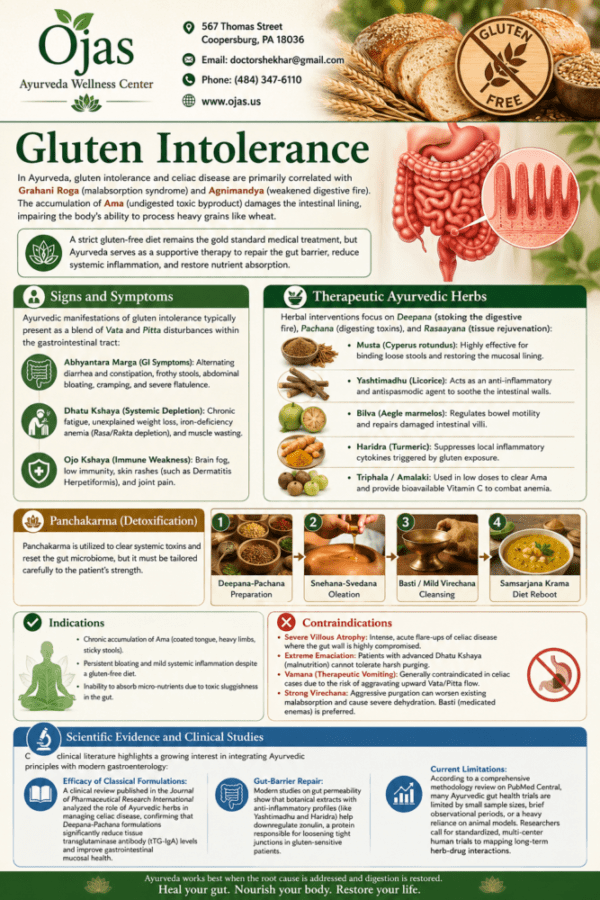
In Ayurveda, gluten intolerance and celiac disease are primarily correlated with Grahani Roga (malabsorption syndrome) and Agnimandya (weakened digestive fire). The accumulation of Ama (undigested toxic byproduct) damages the intestinal lining, impairing the body’s ability to process heavy grains like wheat.
A strict gluten-free diet remains the gold standard medical treatment, but Ayurveda serves as a supportive therapy to repair the gut barrier, reduce systemic inflammation, and restore nutrient absorption.
Signs and Symptoms
Ayurvedic manifestations of gluten intolerance typically present as a blend of Vata and Pitta disturbances within the gastrointestinal tract:
- Abhyantara Marga (GI Symptoms): Alternating diarrhea and constipation, frothy stools, abdominal bloating, cramping, and severe flatulence.
- Dhatu Kshaya (Systemic Depletion): Chronic fatigue, unexplained weight loss, iron-deficiency anemia (Rasa/Rakta depletion), and muscle wasting.
- Ojo Kshaya (Immune Weakness): Brain fog, low immunity, skin rashes (such as Dermatitis Herpetiformis), and joint pain.
Therapeutic Ayurvedic Herbs
Herbal interventions focus on Deepana (stoking the digestive fire), Pachana (digesting toxins), and Rasaayana (tissue rejuvenation):
- Musta (Cyperus rotundus): Highly effective for binding loose stools and restoring the mucosal lining.
- Yashtimadhu (Licorice): Acts as an anti-inflammatory and antispasmodic agent to soothe the intestinal walls.
- Bilva (Aegle marmelos): Regulates bowel motility and repairs damaged intestinal villi.
- Haridra (Turmeric): Suppresses local inflammatory cytokines triggered by gluten exposure.
- Triphala / Amalaki: Used in low doses to clear Ama and provide bioavailable Vitamin C to combat anemia.
Panchakarma (Detoxification)
Panchakarma is utilized to clear systemic toxins and reset the gut microbiome, but it must be tailored carefully to the patient’s strength.
- Deepana-Pachana – Preparation
- Snehana-Svedana – Oleation
- Basti / Mild Virechana – Cleansing
- Samsarjana Krama – Diet Reboot
Indications
- Chronic accumulation of Ama (coated tongue, heavy limbs, sticky stools).
- Persistent bloating and mild systemic inflammation despite a gluten-free diet.
- Inability to absorb micro-nutrients due to toxic sluggishness in the gut.
Contraindications
- Severe Villous Atrophy: Intense, acute flare-ups of celiac disease where the gut wall is highly compromised.
- Extreme Emaciation: Patients with advanced Dhatu Kshaya (malnutrition) cannot tolerate harsh purging.
- Vamana (Therapeutic Vomiting): Generally contraindicated in celiac cases due to the risk of aggravating upward Vata/Pitta flow.
- Strong Virechana: Aggressive purgation can worsen existing malabsorption and cause severe dehydration. Basti (medicated enemas) is preferred.
Scientific Evidence and Clinical Studies
Current clinical literature highlights a growing interest in integrating Ayurvedic principles with modern gastroenterology:
- Efficacy of Classical Formulations: A clinical review published in the Journal of Pharmaceutical Research International analyzed the role of Ayurvedic herbs in managing celiac disease, confirming that Deepana-Pachana formulations significantly reduce tissue transglutaminase antibody (tTG-IgA) levels and improve gastrointestinal mucosal health.
- Gut-Barrier Repair: Modern studies on gut permeability show that botanical extracts with anti-inflammatory profiles (like Yashtimadhu and Haridra) help downregulate zonulin, a protein responsible for loosening tight junctions in gluten-sensitive patients.
- Current Limitations: According to a comprehensive methodology review on PubMed Central, many Ayurvedic gut health trials are limited by small sample sizes, brief observational periods, or a heavy reliance on animal models. Researchers call for standardized, multi-center human trials to mapping long-term herb-drug interactions.