Description
45 minutes: $175
Generally Recommended Series of 7 Therapies
Hrud Basti (Uro basti) in Sanskrit refers to Hrudaya, the heart and Basti, the container or retainer. This is also called as Uro Basti (Uro means chest and basti means retaining something inside). Hence, Hrud Basti is an oil bath on the heart. This suggests an Ayurvedic hot oil treatment where the medicated hot oil preparation or freshly prepared herbal decoction is poured over the heart region. Hrudaya, the heart is considered as one among the Tri marma (three vital areas) measuring about four fingers, covering heart, middle of sternum. In this therapy, bathing the heart region using warm herbal oils or herbal decoctions or herbal ghee depending on the condition.
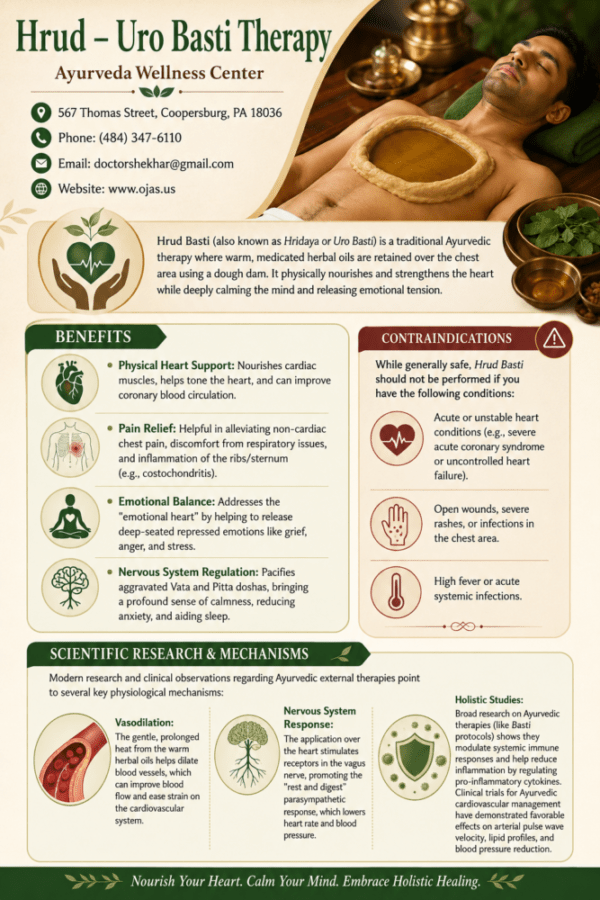
Hrud Basti (also known as Hridaya or Uro Basti) is a traditional Ayurvedic therapy where warm, medicated herbal oils are retained over the chest area using a dough dam. It physically nourishes and strengthens the heart while deeply calming the mind and releasing emotional tension.
Benefits
- Physical Heart Support: Nourishes cardiac muscles, helps tone the heart, and can improve coronary blood circulation.
- Pain Relief: Helpful in alleviating non-cardiac chest pain, discomfort from respiratory issues, and inflammation of the ribs/sternum (e.g., costochondritis).
- Emotional Balance: Addresses the “emotional heart” by helping to release deep-seated repressed emotions like grief, anger, and stress.
- Nervous System Regulation: Pacifies aggravated Vata and Pitta doshas, bringing a profound sense of calmness, reducing anxiety, and aiding sleep.
Contraindications
While generally safe, Hrud Basti should not be performed if you have the following conditions:
- Acute or unstable heart conditions (e.g., severe acute coronary syndrome or uncontrolled heart failure).
- Open wounds, severe rashes, or infections in the chest area.
- High fever or acute systemic infections.
Scientific Research & Mechanisms
Modern research and clinical observations regarding Ayurvedic external therapies point to several key physiological mechanisms:
- Vasodilation: The gentle, prolonged heat from the warm herbal oils helps dilate blood vessels, which can improve blood flow and ease strain on the cardiovascular system.
- Nervous System Response: The application over the heart stimulates receptors in the vagus nerve, promoting the “rest and digest” parasympathetic response, which lowers heart rate and blood pressure.
- Holistic Studies: Broad research on Ayurvedic therapies (like Basti protocols) shows they modulate systemic immune responses and help reduce inflammation by regulating pro-inflammatory cytokines. Clinical trials for Ayurvedic cardiovascular management have demonstrated favorable effects on arterial pulse wave velocity, lipid profiles, and blood pressure reduction.
Benefits*:
- Balances Sadhaka Pitta
- Restores the balance of Avalambaka Kapha
- Helps in balancing Vyana Vata
- Pacifies aggravated Vata dosha in the chest region
- Nourishes and Strengthens the cardiac muscles; thus rejuvenate the heart
- Regulates cardiac functions
- Regulates blood pressure
- Relieves deep seated repressed stress, anger and grief
- Improves blood circulation and breathing
- Gives a sense of peace and happiness
- Beneficial in Ischemic Heart Disease
- Helpful in Cardiomyopathy
- Useful in Valvular heart disease
- Relieves Atrial Fibrillation (A-fib)
*These statements are not evaluated by Food and Drug Administration. This therapy is not intended to diagnosis, treat, cure or prevent any disease.