Description
45 minutes: $175
Reiki is a form of alternative therapy commonly referred to as energy healing. It emerged in Japan in the late 1800’s and is said to involve the transfer of universal energy from the practitioner’s palms to their patient.
Energy healing has been used for centuries in various forms. Advocates say it works with the energy fields around the body.
Some controversy surrounds Reiki, because it is hard to prove its effectiveness through scientific means. However, many people who receive Reiki say it works, and its popularity is increasing. A Google search for the term currently returns no less than 68,900,000 results.
A 2007 survey shows that, in the United States (U.S.), 1.2 million adults tried Reiki or a similar therapy at least once in the previous year. Over 60 hospitals are believed to offer Reiki services to patients.
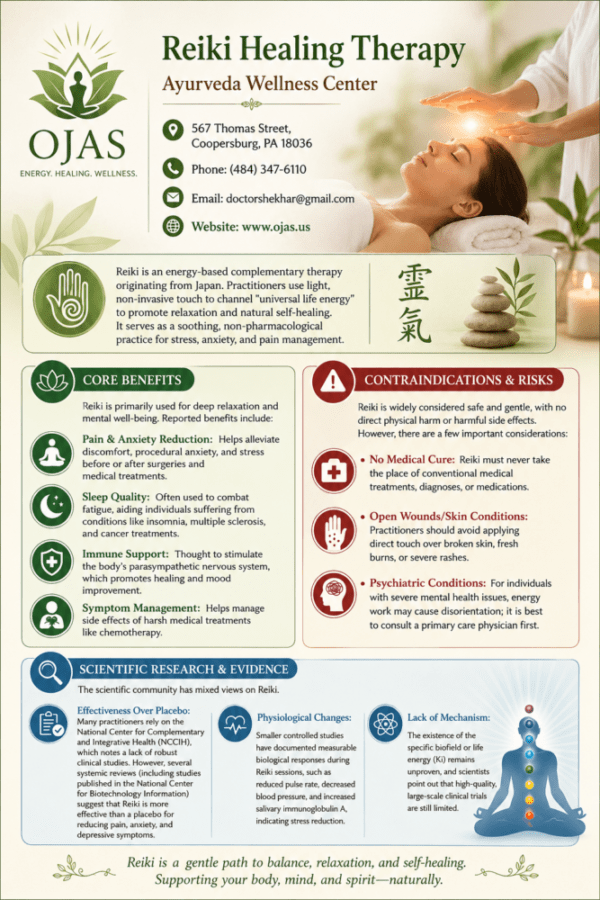
Reiki is an energy-based complementary therapy originating from Japan. Practitioners use light, non-invasive touch to channel “universal life energy” to promote relaxation and natural self-healing. It serves as a soothing, non-pharmacological practice for stress, anxiety, and pain management.
Core Benefits
Reiki is primarily used for deep relaxation and mental well-being. Reported benefits include:
Pain & Anxiety Reduction: Helps alleviate discomfort, procedural anxiety, and stress before or after surgeries and medical treatments.
- Sleep Quality: Often used to combat fatigue, aiding individuals suffering from conditions like insomnia, multiple sclerosis, and cancer treatments.
- Immune Support: Thought to stimulate the body’s parasympathetic nervous system, which promotes healing and mood improvement.
- Symptom Management: Helps manage side effects of harsh medical treatments like chemotherapy.
Contraindications & Risks
Reiki is widely considered safe and gentle, with no direct physical harm or harmful side effects. However, there are a few important considerations:
- No Medical Cure: Reiki must never take the place of conventional medical treatments, diagnoses, or medications.
- Open Wounds/Skin Conditions: Practitioners should avoid applying direct touch over broken skin, fresh burns, or severe rashes.
- Psychiatric Conditions: For individuals with severe mental health issues, energy work may cause disorientation; it is best to consult a primary care physician first.
Scientific Research & Evidence
The scientific community has mixed views on Reiki.
- Effectiveness Over Placebo: Many practitioners rely on the National Center for Complementary and Integrative Health (NCCIH), which notes a lack of robust clinical studies. However, several systemic reviews (including studies published in the National Center for Biotechnology Information) suggest that Reiki is more effective than a placebo for reducing pain, anxiety, and depressive symptoms.
- Physiological Changes: Smaller controlled studies have documented measurable biological responses during Reiki sessions, such as reduced pulse rate, decreased blood pressure, and increased salivary immunoglobulin A, indicating stress reduction.
- Lack of Mechanism: The existence of the specific biofield or life energy (Ki) remains unproven, and scientists point out that high-quality, large-scale clinical trials are still limited.
Benefits*:
- Reiki is linked to a range of physical and emotional health benefits
- Improved and better sleep
- Improved mood
- Pain relief.
- Helps your body return to a state of relaxation, which allows it to heal from damage brought on by stress, injury, or disease.
- There’s evidence that Reiki, used as a complementary therapy with other standard medical techniques, can help people recover after surgery and manage symptoms of cancer and AIDS.
*These statements are not evaluated by Food and Drug Administration. These services are not intended to diagnose, treat, cure or prevent any disease.