Description
Restorative Massage Therapy
Price: $175
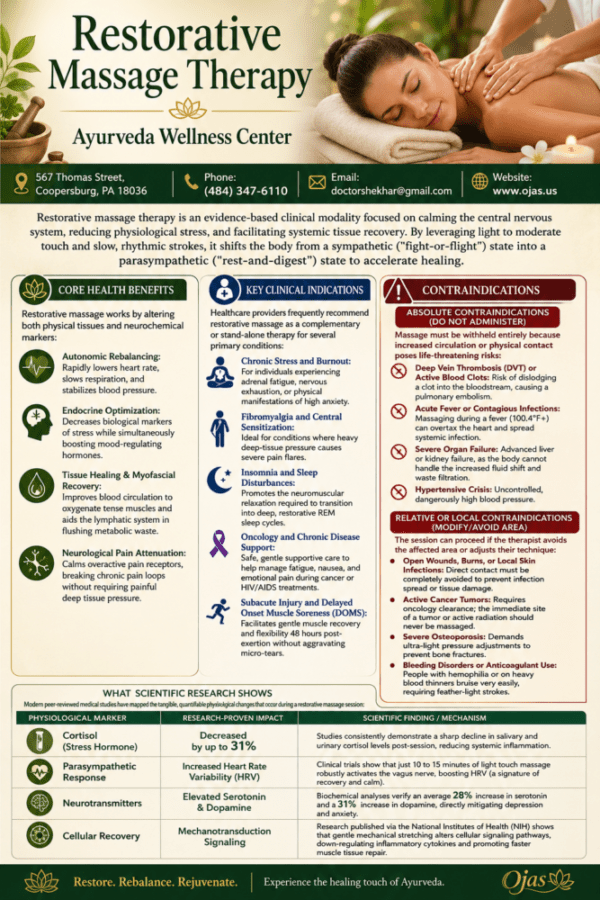
Restorative massage therapy is an evidence-based clinical modality focused on calming the central nervous system, reducing physiological stress, and facilitating systemic tissue recovery. By leveraging light to moderate touch and slow, rhythmic strokes, it shifts the body from a sympathetic (“fight-or-flight”) state into a parasympathetic (“rest-and-digest”) state to accelerate healing.
Core Health Benefits
Restorative massage works by altering both physical tissues and neurochemical markers:
- Autonomic Rebalancing: Rapidly lowers heart rate, slows respiration, and stabilizes blood pressure.
- Endocrine Optimization: Decreases biological markers of stress while simultaneously boosting mood-regulating hormones.
- Tissue Healing & Myofascial Recovery: Improves blood circulation to oxygenate tense muscles and aids the lymphatic system in flushing metabolic waste.
- Neurological Pain Attenuation: Calms overactive pain receptors, breaking chronic pain loops without requiring painful deep tissue pressure.
Key Clinical Indications
Healthcare providers frequently recommend restorative massage as a complementary or stand-alone therapy for several primary conditions:
- Chronic Stress and Burnout: For individuals experiencing adrenal fatigue, nervous exhaustion, or physical manifestations of high anxiety.
- Fibromyalgia and Central Sensitization: Ideal for conditions where heavy deep-tissue pressure causes severe pain flares.
- Insomnia and Sleep Disturbances: Promotes the neuromuscular relaxation required to transition into deep, restorative REM sleep cycles.
- Oncology and Chronic Disease Support: Safe, gentle supportive care to help manage fatigue, nausea, and emotional pain during cancer or HIV/AIDS treatments.
- Subacute Injury and Delayed Onset Muscle Soreness (DOMS): Facilitates gentle muscle recovery and flexibility 48 hours post-exertion without aggravating micro-tears.
Contraindications
While exceptionally safe, specific medical conditions mandate either completely avoiding massage or altering the session to ensure safety.
Absolute Contraindications (Do Not Administer)
Massage must be withheld entirely because increased circulation or physical contact poses life-threatening risks:
- Deep Vein Thrombosis (DVT) or Active Blood Clots: Risk of dislodging a clot into the bloodstream, causing a pulmonary embolism.
- Acute Fever or Contagious Infections: Massaging during a fever (100.4°F+) can overtax the heart and spread systemic infection.
- Severe Organ Failure: Advanced liver or kidney failure, as the body cannot handle the increased fluid shift and waste filtration.
- Hypertensive Crisis: Uncontrolled, dangerously high blood pressure.
Relative or Local Contraindications (Modify/Avoid Area)
The session can proceed if the therapist avoids the affected area or adjusts their technique:
Open Wounds, Burns, or Local Skin Infections: Direct contact must be completely avoided to prevent infection spread or tissue damage.
- Active Cancer Tumors: Requires oncology clearance; the immediate site of a tumor or active radiation should never be massaged.
- Severe Osteoporosis: Demands ultra-light pressure adjustments to prevent bone fractures.
- Bleeding Disorders or Anticoagulant Use: People with hemophilia or on heavy blood thinners bruise very easily, requiring feather-light strokes.
What Scientific Research Shows
Modern peer-reviewed medical studies have mapped the tangible, quantifiable physiological changes that occur during a restorative massage session:
| Physiological Marker | Research-Proven Impact | Scientific Finding / Mechanism |
| Cortisol (Stress Hormone) | Decreased by up to 31% | Studies consistently demonstrate a sharp decline in salivary and urinary cortisol levels post-session, reducing systemic inflammation. |
| Parasympathetic Response | Increased Heart Rate Variability (HRV) | Clinical trials show that just 10 to 15 minutes of light touch massage robustly activates the vagus nerve, boosting HRV (a signature of recovery and calm). |
| Neurotransmitters | Elevated Serotonin & Dopamine | Biochemical analyses verify an average 28% increase in serotonin and a 31% increase in dopamine, directly mitigating depression and anxiety. |
| Cellular Recovery | Mechanotransduction Signaling | Research published via the National Institutes of Health (NIH) shows that gentle mechanical stretching alters cellular signaling pathways, down-regulating inflammatory cytokines and promoting faster muscle tissue repair. |