
Description
45 minutes : $175
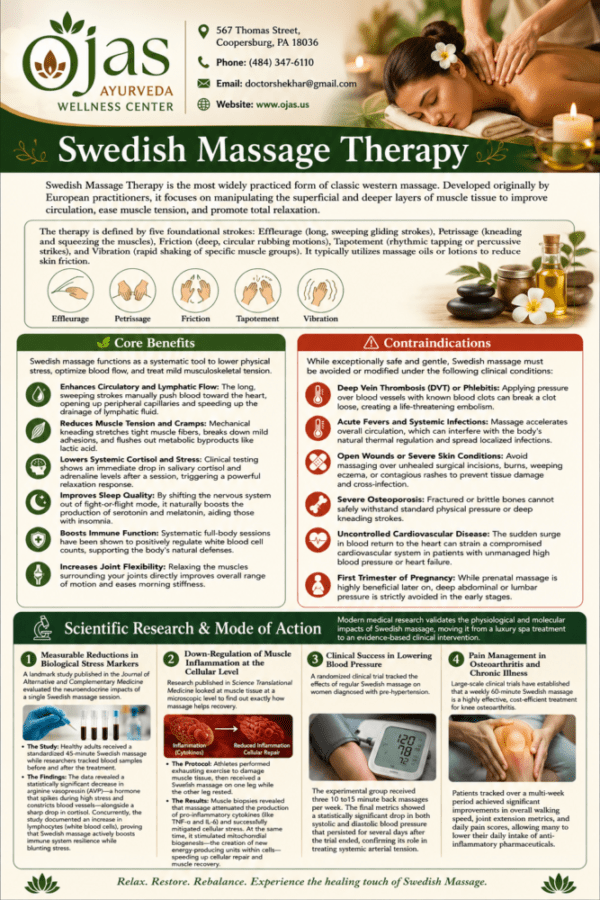
Swedish Massage Therapy is the most widely practiced form of classic western massage. Developed originally by European practitioners, it focuses on manipulating the superficial and deeper layers of muscle tissue to improve circulation, ease muscle tension, and promote total relaxation.
The therapy is defined by five foundational strokes: Effleurage (long, sweeping gliding strokes), Petrissage (kneading and squeezing the muscles), Friction (deep, circular rubbing motions), Tapotement (rhythmic tapping or percussive strikes), and Vibration (rapid shaking of specific muscle groups). It typically utilizes massage oils or lotions to reduce skin friction.
🌿 Core Benefits
Swedish massage functions as a systematic tool to lower physical stress, optimize blood flow, and treat mild musculoskeletal tension.
- Enhances Circulatory and Lymphatic Flow: The long, sweeping strokes manually push blood toward the heart, opening up peripheral capillaries and speeding up the drainage of lymphatic fluid.
- Reduces Muscle Tension and Cramps: Mechanical kneading stretches tight muscle fibers, breaks down mild adhesions, and flushes out metabolic byproducts like lactic acid.
- Lowers Systemic Cortisol and Stress: Clinical testing shows an immediate drop in salivary cortisol and adrenaline levels after a session, triggering a powerful relaxation response.
- Improves Sleep Quality: By shifting the nervous system out of fight-or-flight mode, it naturally boosts the production of serotonin and melatonin, aiding those with insomnia.
- Boosts Immune Function: Systematic full-body sessions have been shown to positively regulate white blood cell counts, supporting the body’s natural defenses.
- Increases Joint Flexibility: Relaxing the muscles surrounding your joints directly improves overall range of motion and eases morning stiffness.
🚫 Contraindications
While exceptionally safe and gentle, Swedish massage must be avoided or modified under the following clinical conditions:
- Deep Vein Thrombosis (DVT) or Phlebitis: Applying pressure over blood vessels with known blood clots can break a clot loose, creating a life-threatening embolism.
- Acute Fevers and Systemic Infections: Massage accelerates overall circulation, which can interfere with the body’s natural thermal regulation and spread localized infections.
- Open Wounds or Severe Skin Conditions: Avoid massaging over unhealed surgical incisions, burns, weeping eczema, or contagious rashes to prevent tissue damage and cross-infection.
- Severe Osteoporosis: Fractured or brittle bones cannot safely withstand standard physical pressure or deep kneading strokes.
- Uncontrolled Cardiovascular Disease: The sudden surge in blood return to the heart can strain a compromised cardiovascular system in patients with unmanaged high blood pressure or heart failure.
- First Trimester of Pregnancy: While prenatal massage is highly beneficial later on, deep abdominal or lumbar pressure is strictly avoided in the early stages.
🔬 Scientific Research & Mode of Action
Modern medical research validates the physiological and molecular impacts of Swedish massage, moving it from a luxury spa treatment to an evidence-based clinical intervention:
- Measurable Reductions in Biological Stress Markers
A landmark study published in the Journal of Alternative and Complementary Medicine evaluated the neuroendocrine impacts of a single Swedish massage session.
- The Study: Healthy adults received a standardized 45-minute Swedish massage while researchers tracked blood samples before and after the treatment.
- The Findings: The data revealed a statistically significant decrease in arginine vasopressin (AVP)—a hormone that spikes during high stress and constricts blood vessels—alongside a sharp drop in cortisol. Concurrently, the study documented an increase in lymphocytes (white blood cells), proving that Swedish massage actively boosts immune system resilience while blunting stress.
- Down-Regulation of Muscle Inflammation at the Cellular Level
Research published in Science Translational Medicine looked at muscle tissue at a microscopic level to find out exactly how massage helps recovery.
- The Protocol: Athletes performed exhausting exercise to damage muscle tissue, then received a Swedish massage on one leg while the other leg rested.
- The Results: Muscle biopsies revealed that massage attenuated the production of pro-inflammatory cytokines (like TNF-α and IL-6) and successfully mitigated cellular stress. At the same time, it stimulated mitochondrial biogenesis—the creation of new energy-producing units within cells—speeding up cellular repair and muscle recovery.
- Clinical Success in Lowering Blood Pressure
A randomized clinical trial tracked the effects of regular Swedish massage on women diagnosed with pre-hypertension. The experimental group received three 10 to15 minute back massages per week. The final metrics showed a statistically significant drop in both systolic and diastolic blood pressure that persisted for several days after the trial ended, confirming its role in treating systemic arterial tension.
- Pain Management in Osteoarthritis and Chronic Illness
Large-scale clinical trials have established that a weekly 60-minute Swedish massage is a highly effective, cost-efficient treatment for knee osteoarthritis. Patients tracked over a multi-week period achieved significant improvements in overall walking speed, joint extension metrics, and daily pain scores, allowing many to lower their daily intake of anti-inflammatory pharmaceuticals.