
Description
5 days / $2500
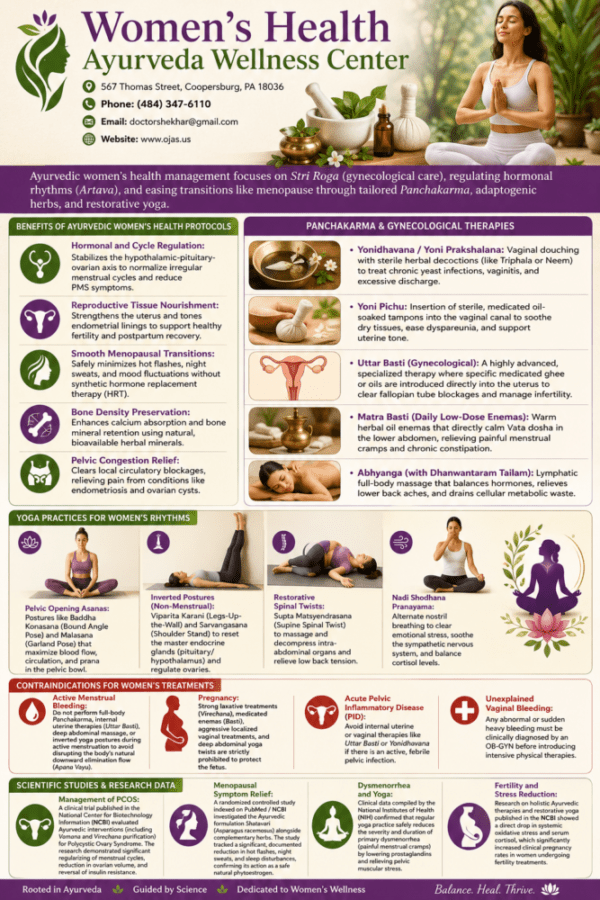
Ayurvedic women’s health management focuses on Stri Roga (gynecological care), regulating hormonal rhythms (Artava), and easing transitions like menopause through tailored Panchakarma, adaptogenic herbs, and restorative yoga.
Benefits of Ayurvedic Women’s Health Protocols
- Hormonal and Cycle Regulation: Stabilizes the hypothalamic-pituitary-ovarian axis to normalize irregular menstrual cycles and reduce PMS symptoms.
- Reproductive Tissue Nourishment: Strengthens the uterus and tones endometrial linings to support healthy fertility and postpartum recovery.
- Smooth Menopausal Transitions: Safely minimizes hot flashes, night sweats, and mood fluctuations without synthetic hormone replacement therapy (HRT).
- Bone Density Preservation: Enhances calcium absorption and bone mineral retention using natural, bioavailable herbal minerals.
- Pelvic Congestion Relief: Clears local circulatory blockages, relieving pain from conditions like endometriosis and ovarian cysts.
Panchakarma & Gynecological Therapies
- Yonidhavana / Yoni Prakshalana: Vaginal douching with sterile herbal decoctions (like Triphala or Neem) to treat chronic yeast infections, vaginitis, and excessive discharge.
- Yoni Pichu: Insertion of sterile, medicated oil-soaked tampons into the vaginal canal to soothe dry tissues, ease dyspareunia, and support uterine tone.
- Uttar Basti (Gynecological): A highly advanced, specialized therapy where specific medicated ghee or oils are introduced directly into the uterus to clear fallopian tube blockages and manage infertility.
- Matra Basti (Daily Low-Dose Enemas): Warm herbal oil enemas that directly calm Vata dosha in the lower abdomen, relieving painful menstrual cramps and chronic constipation.
- Abhyanga (with Dhanwantaram Tailam): Lymphatic full-body massage that balances hormones, relieves lower back aches, and drains cellular metabolic waste.
Yoga Practices for Women’s Rhythms
- Pelvic Opening Asanas: Postures like Baddha Konasana (Bound Angle Pose) and Malasana (Garland Pose) that maximize blood flow, circulation, and prana in the pelvic bowl.
- Inverted Postures (Non-Menstrual): Viparita Karani (Legs-Up-the-Wall) and Sarvangasana (Shoulder Stand) to reset the master endocrine glands (pituitary/hypothalamus) and regulate ovaries.
- Restorative Spinal Twists: Supta Matsyendrasana (Supine Spinal Twist) to massage and decompress intra-abdominal organs and relieve low back tension.
- Nadi Shodhana Pranayama: Alternate nostril breathing to clear emotional stress, soothe the sympathetic nervous system, and balance cortisol levels.
Contraindications for Women’s Treatments
- Active Menstrual Bleeding: Do not perform full-body Panchakarma, internal uterine therapies (Uttar Basti), deep abdominal massage, or inverted yoga postures during active menstruation to avoid disrupting the body’s natural downward elimination flow (Apana Vayu).
- Pregnancy: Strong laxative treatments (Virechana), medicated enemas (Basti), aggressive localized vaginal treatments, and deep abdominal yoga twists are strictly prohibited to protect the fetus.
- Acute Pelvic Inflammatory Disease (PID): Avoid internal uterine or vaginal therapies like Uttar Basti or Yonidhavana if there is an active, febrile pelvic infection.
- Unexplained Vaginal Bleeding: Any abnormal or sudden heavy bleeding must be clinically diagnosed by an OB-GYN before introducing intensive physical therapies.
Scientific Studies & Research Data
- Management of PCOS: A clinical trial published in the National Center for Biotechnology Information (NCBI) evaluated Ayurvedic interventions (including Vamana and Virechana purification) for Polycystic Ovary Syndrome. The research demonstrated significant regularizing of menstrual cycles, reduction in ovarian volume, and reversal of insulin resistance.
- Menopausal Symptom Relief: A randomized controlled study indexed on PubMed / NCBI investigated the Ayurvedic formulation Shatavari (Asparagus racemosus) alongside complementary herbs. The study tracked a significant, documented reduction in hot flashes, night sweats, and sleep disturbances, confirming its action as a safe natural phytoestrogen.
- Dysmenorrhea and Yoga: Clinical data compiled by the National Institutes of Health (NIH) confirmed that regular yoga practice safely reduces the severity and duration of primary dysmenorrhea (painful menstrual cramps) by lowering prostaglandins and relieving pelvic muscular stress.
- Fertility and Stress Reduction: Research on holistic Ayurvedic therapies and restorative yoga published in the NCBI showed a direct drop in systemic oxidative stress and serum cortisol, which significantly increased clinical pregnancy rates in women undergoing fertility treatments.
The provided Panchakarma cancellation policy outlines specific financial penalties and credits based on when a cancellation notice is submitted. The policy structures its fees strictly around the mandatory 50% upfront deposit rather than the total program cost.
Below is a clear structural breakdown of how this policy applies to your registration:
💳 Registration & Arrival Payments
- At Registration: A mandatory 50% deposit of the total Panchakarma program cost is due immediately to secure your dates.
- Upon Arrival: The remaining 50% balance is due in full. Once paid at arrival, this final amount is completely non-refundable.
📅 Cancellation Timelines & Financial Penalties
If you must cancel your program prior to your arrival date, your 50% deposit will be handled based on the following three distinct windows:
| Cancellation Window | Processing Fee (Kept by Center) | Remaining Balance Allocation |
| 30+ Days before start | 10% of your deposit is withheld | Credited toward a future program |
| 21 to 30 Days before start | 20% of your deposit is withheld | Credited toward a future program |
| Less than 21 Days before start | 100% of your deposit is withheld | Zero credit; the entire deposit is forfeited |
🧮 Hypothetical Scenario (For Clarity)
If your total Panchakarma program cost is $2,000, your upfront deposit at registration is $1,000. If you cancel:
- 35 days out: The center keeps $100 (10% of deposit). You receive a $900 credit for a future program.
- 25 days out: The center keeps $200 (20% of deposit). You receive an $800 credit for a future program.
- 15 days out: The center keeps the full $1,000 deposit. You receive zero credit.
If you would like help calculating the exact processing fees and future program credits for a specific package price, or if you need to review the scheduling availability for a future date, please let me know.
*These statements are not evaluated by Food and Drug Administration. These therapies are not intended to diagnose, treat, or cure any disease.