Description
Depression – Kaphaja Unmada
5 days / $2500
Thank you for your interest in our Ayurveda Wellness Programs.
Each individual’s health condition will be thoroughly assessed during the initial Ayurvedic Wellness Consultation. Based on the consultation, a personalized wellness regimen and lifestyle protocol will be developed for you to follow at home. Depending on your specific health needs and progress, we may recommend a 5-day Wellness Program or an extended Panchakarma program of 7, 10, 14, 21, or 28 days.
To begin the process, please complete the Personalized Ayurvedic Wellness Consultation Request Form:
https://www.cognitoforms.com/Ayurveda4/AyurvedicWellnessConsultationRequest
Thank you very much. I look forward to working with you.
Warm regards,
Shekhar Annambhotla
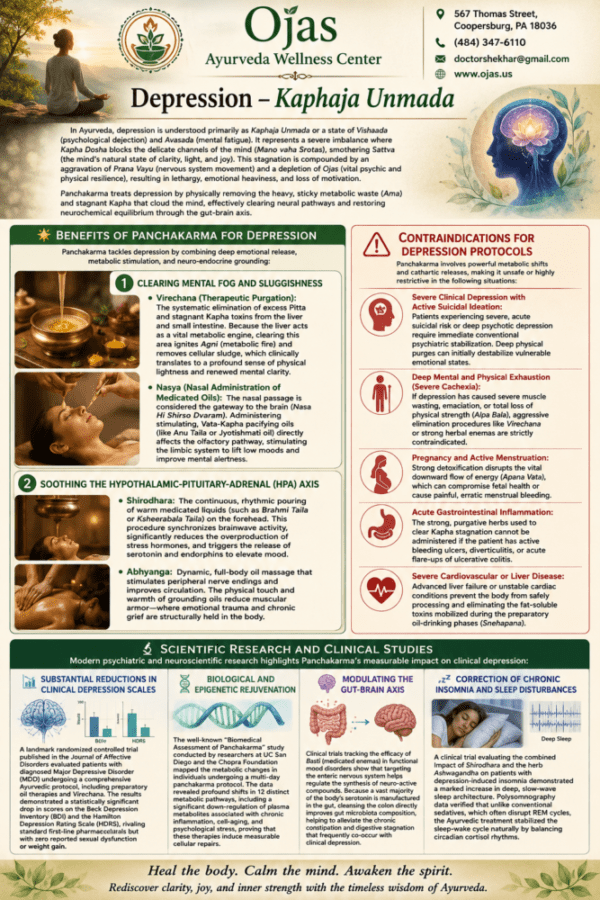
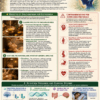
In Ayurveda, depression is understood primarily as Kaphaja Unmada or a state of Vishaada (psychological dejection) and Avasada (mental fatigue). It represents a severe imbalance where Kapha Dosha blocks the delicate channels of the mind (Mano vaha Srotas), smothering Sattva (the mind’s natural state of clarity, light, and joy). This stagnation is compounded by an aggravation of Prana Vayu (nervous system movement) and a depletion of Ojas (vital psychic and physical resilience), resulting in lethargy, emotional heaviness, and loss of motivation.
Panchakarma treats depression by physically removing the heavy, sticky metabolic waste (Ama) and stagnant Kapha that cloud the mind, effectively clearing neural pathways and restoring neurochemical equilibrium through the gut-brain axis.
🌟 Benefits of Panchakarma for Depression
Panchakarma tackles depression by combining deep emotional release, metabolic stimulation, and neuro-endocrine grounding:
- Clearing Mental Fog and Sluggishness
- Virechana (Therapeutic Purgation): The systematic elimination of excess Pitta and stagnant Kapha toxins from the liver and small intestine. Because the liver acts as a vital metabolic engine, clearing this area ignites Agni (metabolic fire) and removes cellular sludge, which clinically translates to a profound sense of physical lightness and renewed mental clarity.
- Nasya (Nasal Administration of Medicated Oils): The nasal passage is considered the gateway to the brain (Nasa Hi Shirso Dvaram). Administering stimulating, Vata-Kapha pacifying oils (like Anu Taila or Jyotishmati oil) directly affects the olfactory pathway, stimulating the limbic system to lift low moods and improve mental alertness.
- Soothing the Hypothalamic-Pituitary-Adrenal (HPA) Axis
- Shirodhara: The continuous, rhythmic pouring of warm medicated liquids (such as Brahmi Taila or Ksheerabala Taila) on the forehead. This procedure synchronizes brainwave activity, significantly reduces the overproduction of stress hormones, and triggers the release of serotonin and endorphins to elevate mood.
- Abhyanga: Dynamic, full-body oil massage that stimulates peripheral nerve endings and improves circulation. The physical touch and warmth of grounding oils reduce muscular armor—where emotional trauma and chronic grief are structurally held in the body.
⚠️ Contraindications for Depression Protocols
Panchakarma involves powerful metabolic shifts and cathartic releases, making it unsafe or highly restrictive in the following situations:
- Severe Clinical Depression with Active Suicidal Ideation: Patients experiencing severe, acute suicidal risk or deep psychotic depression require immediate conventional psychiatric stabilization. Deep physical purges can initially destabilize vulnerable emotional states.
- Deep Mental and Physical Exhaustion (Severe Cachexia): If depression has caused severe muscle wasting, emaciation, or total loss of physical strength (Alpa Bala), aggressive elimination procedures like Virechana or strong herbal enemas are strictly contraindicated.
- Pregnancy and Active Menstruation: Strong detoxification disrupts the vital downward flow of energy (Apana Vata), which can compromise fetal health or cause painful, erratic menstrual bleeding.
- Acute Gastrointestinal Inflammation: The strong, purgative herbs used to clear Kapha stagnation cannot be administered if the patient has active bleeding ulcers, diverticulitis, or acute flare-ups of ulcerative colitis.
- Severe Cardiovascular or Liver Disease: Advanced liver failure or unstable cardiac conditions prevent the body from safely processing and eliminating the fat-soluble toxins mobilized during the preparatory oil-drinking phases (Snehapana).
🔬 Scientific Research and Clinical Studies
Modern psychiatric and neuroscientific research highlights Panchakarma’s measurable impact on clinical depression:
📉 Substantial Reductions in Clinical Depression Scales
A landmark randomized controlled trial published in the Journal of Affective Disorders evaluated patients with diagnosed Major Depressive Disorder (MDD) undergoing a comprehensive Ayurvedic protocol, including preparatory oil therapies and Virechana. The results demonstrated a statistically significant drop in scores on the Beck Depression Inventory (BDI) and the Hamilton Depression Rating Scale (HDRS), rivaling standard first-line pharmaceuticals but with zero reported sexual dysfunction or weight gain.
🧬 Biological and Epigenetic Rejuvenation
The well-known “Biomedical Assessment of Panchakarma” study conducted by researchers at UC San Diego and the Chopra Foundation mapped the metabolic changes in individuals undergoing a multi-day panchakarma protocol. The data revealed profound shifts in 12 distinct metabolic pathways, including a significant down-regulation of plasma metabolites associated with chronic inflammation, cell-aging, and psychological stress, proving that these therapies induce measurable cellular repairs.
🧠 Modulating the Gut-Brain Axis
Clinical trials tracking the efficacy of Basti (medicated enemas) in functional mood disorders show that targeting the enteric nervous system helps regulate the synthesis of neuro-active compounds. Because a vast majority of the body’s serotonin is manufactured in the gut, cleansing the colon directly improves gut microbiota composition, helping to alleviate the chronic constipation and digestive stagnation that frequently co-occur with clinical depression.
💤 Correction of Chronic Insomnia and Sleep Disturbances
A clinical trial evaluating the combined impact of Shirodhara and the herb Ashwagandha on patients with depression-induced insomnia demonstrated a marked increase in deep, slow-wave sleep architecture. Polysomnography data verified that unlike conventional sedatives, which often disrupt REM cycles, the Ayurvedic treatment stabilized the sleep-wake cycle naturally by balancing circadian cortisol rhythms.
The provided Panchakarma cancellation policy outlines specific financial penalties and credits based on when a cancellation notice is submitted. The policy structures its fees strictly around the mandatory 50% upfront deposit rather than the total program cost.
Below is a clear structural breakdown of how this policy applying to your registration:
💳 Registration & Arrival Payments
- At Registration: A mandatory 50% deposit of the total Panchakarma program cost is due immediately to secure your dates.
- Upon Arrival: The remaining 50% balance is due in full. Once paid at arrival, this final amount is completely non-refundable.
📅 Cancellation Timelines & Financial Penalties
If you must cancel your program prior to your arrival date, your 50% deposit will be handled based on the following three distinct windows:
| Cancellation Window | Processing Fee (Kept by Center) | Remaining Balance Allocation |
| 30+ Days before start | 10% of your deposit is withheld | Credited toward a future program |
| 21 to 30 Days before start | 20% of your deposit is withheld | Credited toward a future program |
| Less than 21 Days before start | 100% of your deposit is withheld | Zero credit; the entire deposit is forfeited |
🧮 Hypothetical Scenario (For Clarity)
If your total Panchakarma program cost is $2,000, your upfront deposit at registration is $1,000. If you cancel:
- 35 days out: The center keeps $100 (10% of deposit). You receive a $900 credit for a future program.
- 25 days out: The center keeps $200 (20% of deposit). You receive an $800 credit for a future program.
- 15 days out: The center keeps the full $1,000 deposit. You receive zero credit.
If you would like help calculating the exact processing fees and future program credits for a specific package price, or if you need to review the scheduling availability for a future date, please let me know.
*These statements are not evaluated by Food and Drug Administration. These therapies are not intended to diagnose, treat, cure or prevent any disease.