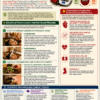
Description
High Blood Pressure – Uchcha Rakta Chapa
5 days / $2500
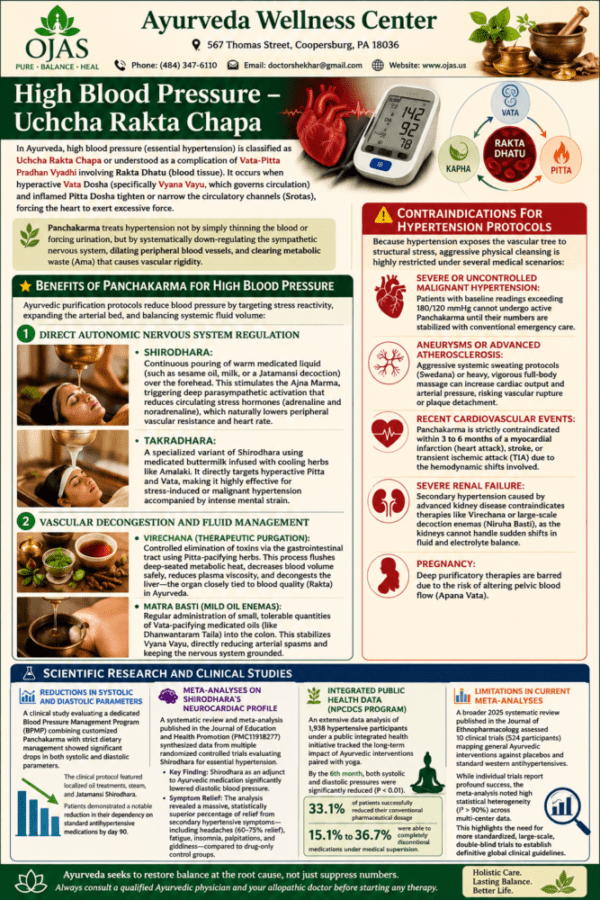
In Ayurveda, high blood pressure (essential hypertension) is classified as Uchcha Rakta Chapa or understood as a complication of Vata-Pitta Pradhan Vyadhi involving Rakta Dhatu (blood tissue). It occurs when hyperactive Vata Dosha (specifically Vyana Vayu, which governs circulation) and inflamed Pitta Dosha tighten or narrow the circulatory channels (Srotas), forcing the heart to exert excessive force.
Panchakarma treats hypertension not by simply thinning the blood or forcing urination, but by systematically down-regulating the sympathetic nervous system, dilating peripheral blood vessels, and clearing metabolic waste (Ama) that causes vascular rigidity.
🌟 Benefits of Panchakarma for High Blood Pressure
Ayurvedic purification protocols reduce blood pressure by targeting stress reactivity, expanding the arterial bed, and balancing systemic fluid volume:
- Direct Autonomic Nervous System Regulation
- Shirodhara: Continuous pouring of warm medicated liquid (such as sesame oil, milk, or a Jatamansi decoction) over the forehead. This stimulates the Ajna Marma, triggering deep parasympathetic activation that reduces circulating stress hormones (adrenaline and noradrenaline), which naturally lowers peripheral vascular resistance and heart rate.
- Takradhara: A specialized variant of Shirodhara using medicated buttermilk infused with cooling herbs like Amalaki. It directly targets hyperactive Pitta and Vata, making it highly effective for stress-induced or malignant hypertension accompanied by intense mental strain.
- Vascular Decongestion and Fluid Management
- Virechana (Therapeutic Purgation): Controlled elimination of toxins via the gastrointestinal tract using Pitta-pacifying herbs. This process flushes deep-seated metabolic heat, decreases blood volume safely, reduces plasma viscosity, and decongests the liver—the organ closely tied to blood quality (Rakta) in Ayurveda.
- Matra Basti (Mild Oil Enemas): Regular administration of small, tolerable quantities of Vata-pacifying medicated oils (like Dhanwantaram Taila) into the colon. This stabilizes Vyana Vayu, directly reducing arterial spasms and keeping the nervous system grounded.
⚠️ Contraindications for Hypertension Protocols
Because hypertension exposes the vascular tree to structural stress, aggressive physical cleansing is highly restricted under several medical scenarios:
- Severe or Uncontrolled Malignant Hypertension: Patients with baseline readings exceeding 180/120 mmHg cannot undergo active Panchakarma until their numbers are stabilized with conventional emergency care.
- Aneurysms or Advanced Atherosclerosis: Aggressive systemic sweating protocols (Swedana) or heavy, vigorous full-body massage can increase cardiac output and arterial pressure, risking vascular rupture or plaque detachment.
- Recent Cardiovascular Events: Panchakarma is strictly contraindicated within 3 to 6 months of a myocardial infarction (heart attack), stroke, or transient ischemic attack (TIA) due to the hemodynamic shifts involved.
- Severe Renal Failure: Secondary hypertension caused by advanced kidney disease contraindicates therapies like Virechana or large-scale decoction enemas (Niruha Basti), as the kidneys cannot handle sudden shifts in fluid and electrolyte balance.
- Pregnancy: Deep purificatory therapies are barred due to the risk of altering pelvic blood flow (Apana Vata).
🔬 Scientific Research and Clinical Studies
Modern cardiology and integrative medicine research increasingly document the physiological mechanism of these protocols:
📉 Reductions in Systolic and Diastolic Parameters
A clinical study evaluating a dedicated Blood Pressure Management Program (BPMP) combining customized Panchakarma with strict dietary management showed significant drops in both systolic and diastolic parameters. The clinical protocol featured localized oil treatments, steam, and Shirodhara. Patients demonstrated a notable reduction in their dependency on standard antihypertensive medications by day 90.
🧠 Meta-Analyses on Shirodhara’s Neurocardiac Profile
A systematic review and meta-analysis published in the Journal of Education and Health Promotion (PMC11918277) synthesized data from multiple randomized controlled trials evaluating Shirodhara for essential hypertension.
- Key Finding: Shirodhara as an adjunct to Ayurvedic medication significantly lowered diastolic blood pressure.
- Symptom Relief: The analysis revealed a massive, statistically superior percentage of relief from secondary hypertensive symptoms—including headaches (60–75% relief), fatigue, insomnia, palpitations, and giddiness—compared to drug-only control groups.
🌿 Integrated Public Health Data (NPCDCS Program)
An extensive data analysis of 1,938 hypertensive participants under a public integrated health initiative tracked the long-term impact of Ayurvedic interventions paired with yoga. By the 6th month, both systolic and diastolic pressures were significantly reduced (P < 0.01). Notably, 33.1% of patients successfully reduced their conventional pharmaceutical dosage, while 15.1% to 36.7% were able to completely discontinue their conventional medications under medical supervision.
📊 Limitations in Current Meta-Analyses
A broader 2025 systematic review published in the Journal of Ethnopharmacology assessed 10 clinical trials (524 participants) mapping general Ayurvedic interventions against placebos and standard western anti-hypertensives. While individual trials report profound success, the meta-analysis noted high statistical heterogeneity (I² > 90%) across multi-center data. This highlights the need for more standardized, large-scale, double-blind trials to establish definitive global clinical guidelines
The provided Panchakarma cancellation policy outlines specific financial penalties and credits based on when a cancellation notice is submitted. The policy structures its fees strictly around the mandatory 50% upfront deposit rather than the total program cost.
Below is a clear structural breakdown of how this policy applying to your registration:
💳 Registration & Arrival Payments
- At Registration: A mandatory 50% deposit of the total Panchakarma program cost is due immediately to secure your dates.
- Upon Arrival: The remaining 50% balance is due in full. Once paid at arrival, this final amount is completely non-refundable.
📅 Cancellation Timelines & Financial Penalties
If you must cancel your program prior to your arrival date, your 50% deposit will be handled based on the following three distinct windows:
| Cancellation Window | Processing Fee (Kept by Center) | Remaining Balance Allocation |
| 30+ Days before start | 10% of your deposit is withheld | Credited toward a future program |
| 21 to 30 Days before start | 20% of your deposit is withheld | Credited toward a future program |
| Less than 21 Days before start | 100% of your deposit is withheld | Zero credit; the entire deposit is forfeited |
🧮 Hypothetical Scenario (For Clarity)
If your total Panchakarma program cost is $2,000, your upfront deposit at registration is $1,000. If you cancel:
- 35 days out: The center keeps $100 (10% of deposit). You receive a $900 credit for a future program.
- 25 days out: The center keeps $200 (20% of deposit). You receive an $800 credit for a future program.
- 15 days out: The center keeps the full $1,000 deposit. You receive zero credit.
If you would like help calculating the exact processing fees and future program credits for a specific package price, or if you need to review the scheduling availability for a future date, please let me know.