
Description
5 days / $2500
Digestive Health
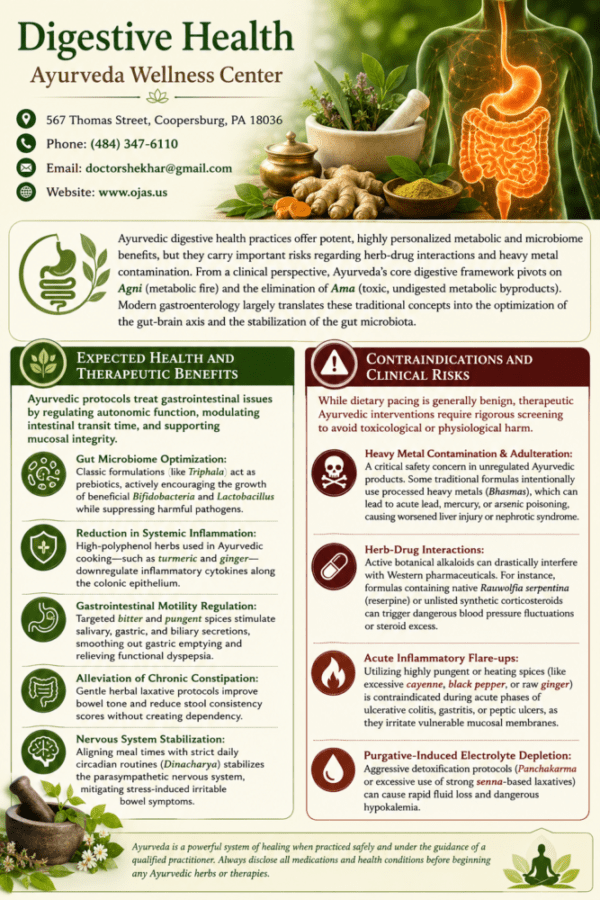
Ayurvedic digestive health practices offer potent, highly personalized metabolic and microbiome benefits, but they carry important risks regarding herb-drug interactions and heavy metal contamination. From a clinical perspective, Ayurveda’s core digestive framework pivots on Agni (metabolic fire) and the elimination of Ama (toxic, undigested metabolic byproducts). Modern gastroenterology largely translates these traditional concepts into the optimization of the gut-brain axis and the stabilization of the gut microbiota.
Expected Health and Therapeutic Benefits
Ayurvedic protocols treat gastrointestinal issues by regulating autonomic function, modulating intestinal transit time, and supporting mucosal integrity.
- Gut Microbiome Optimization: Classic formulations (like Triphala) act as prebiotics, actively encouraging the growth of beneficial Bifidobacteria and Lactobacillus while suppressing harmful pathogens.
- Reduction in Systemic Inflammation: High-polyphenol herbs used in Ayurvedic cooking—such as turmeric and ginger—downregulate inflammatory cytokines along the colonic epithelium.
- Gastrointestinal Motility Regulation: Targeted bitter and pungent spices stimulate salivary, gastric, and biliary secretions, smoothing out gastric emptying and relieving functional dyspepsia.
- Alleviation of Chronic Constipation: Gentle herbal laxative protocols improve bowel tone and reduce stool consistency scores without creating dependency.
- Nervous System Stabilization: Aligning meal times with strict daily circadian routines (Dinacharya) stabilizes the parasympathetic nervous system, mitigating stress-induced irritable bowel symptoms.
Contraindications and Clinical Risks
While dietary pacing is generally benign, therapeutic Ayurvedic interventions require rigorous screening to avoid toxicological or physiological harm.
- Heavy Metal Contamination & Adulteration: A critical safety concern in unregulated Ayurvedic products. Some traditional formulas intentionally use processed heavy metals (Bhasmas), which can lead to acute lead, mercury, or arsenic poisoning, causing worsened liver injury or nephrotic syndrome.
- Herb-Drug Interactions: Active botanical alkaloids can drastically interfere with Western pharmaceuticals. For instance, formulas containing native Rauwolfia serpentina (reserpine) or unlisted synthetic corticosteroids can trigger dangerous blood pressure fluctuations or steroid excess.
- Acute Inflammatory Flare-ups: Utilizing highly pungent or heating spices (like excessive cayenne, black pepper, or raw ginger) is contraindicated during acute phases of ulcerative colitis, gastritis, or peptic ulcers, as they irritate vulnerable mucosal membranes.
- Purgative-Induced Electrolyte Depletion: Aggressive detoxification protocols (Panchakarma or excessive use of strong senna-based laxatives) can cause rapid fluid loss and dangerous hypokalemia
The provided Panchakarma cancellation policy outlines specific financial penalties and credits based on when a cancellation notice is submitted. The policy structures its fees strictly around the mandatory 50% upfront deposit rather than the total program cost.
Below is a clear structural breakdown of how this policy applying to your registration:
💳 Registration & Arrival Payments
- At Registration: A mandatory 50% deposit of the total Panchakarma program cost is due immediately to secure your dates.
- Upon Arrival: The remaining 50% balance is due in full. Once paid at arrival, this final amount is completely non-refundable.
📅 Cancellation Timelines & Financial Penalties
If you must cancel your program prior to your arrival date, your 50% deposit will be handled based on the following three distinct windows:
| Cancellation Window | Processing Fee (Kept by Center) | Remaining Balance Allocation |
| 30+ Days before start | 10% of your deposit is withheld | Credited toward a future program |
| 21 to 30 Days before start | 20% of your deposit is withheld | Credited toward a future program |
| Less than 21 Days before start | 100% of your deposit is withheld | Zero credit; the entire deposit is forfeited |
🧮 Hypothetical Scenario (For Clarity)
If your total Panchakarma program cost is $2,000, your upfront deposit at registration is $1,000. If you cancel:
- 35 days out: The center keeps $100 (10% of deposit). You receive a $900 credit for a future program.
- 25 days out: The center keeps $200 (20% of deposit). You receive an $800 credit for a future program.
- 15 days out: The center keeps the full $1,000 deposit. You receive zero credit.
If you would like help calculating the exact processing fees and future program credits for a specific package price, or if you need to review the scheduling availability for a future date, please let me know.